
 personal trainer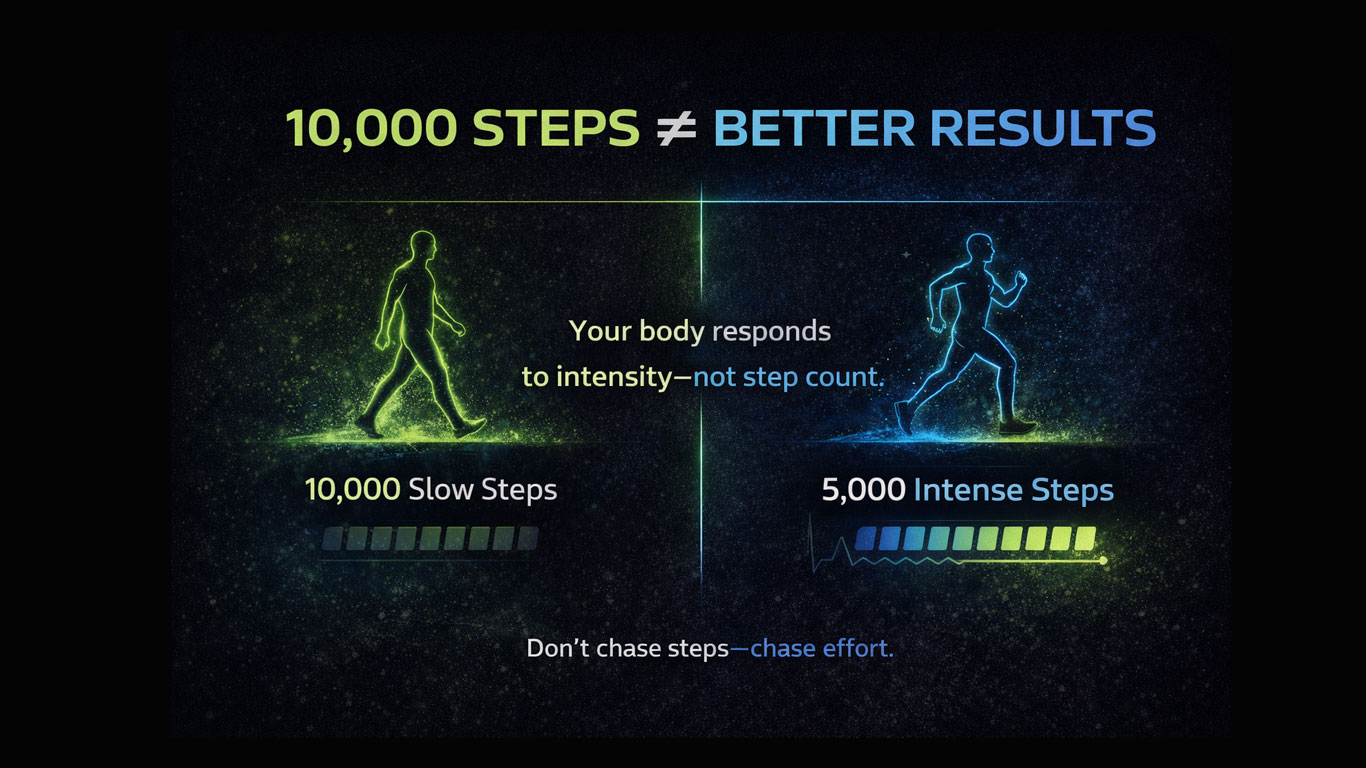
10,000 steps a day
� 10,000-step goal dates back to the 1960s
The idea that everyone should aim for 10,000 steps a day has become one of the most widely accepted rules in fitness. It’s printed on fitness trackers, built into apps, and often treated as a universal benchmark for health. But what many people don’t realize is that this number didn’t originate from science—it started as marketing.
The 10,000-step goal dates back to the 1960s in Japan, when a company released one of the first pedometers called the “Manpo-kei,” which translates to “10,000 steps meter.” The number wasn’t based on clinical research or physiological thresholds. It was chosen because it sounded appealing, was easy to remember, and even looked visually satisfying in Japanese characters. Over time, the number stuck, and as wearable fitness technology evolved, it became embedded in global health culture as a default target.
While walking is undeniably beneficial, the problem lies in how the metric is interpreted. Not all steps are created equal. Walking 10,000 slow, casual steps throughout the day may contribute to general movement and calorie burn, but it doesn’t necessarily challenge your cardiovascular system in a meaningful way. On the other hand, 5,000 purposeful, high-intensity steps—like brisk walking, incline walking, or intervals—can elevate your heart rate, improve cardiovascular fitness, and create a stronger metabolic response.
The body doesn’t respond to step count alone; it responds to intensity. When your heart rate increases and your breathing becomes more labored, your body is being pushed to adapt. This is where real fitness gains occur—improvements in endurance, oxygen utilization, and overall conditioning. Simply accumulating steps without reaching that threshold may keep you active, but it won’t deliver the same level of benefit.
This doesn’t mean 10,000 steps is useless. For many people, especially those who are sedentary, it can be a helpful starting point—a way to increase daily movement and break up long periods of inactivity. It provides structure and a clear, achievable goal. But the mistake is treating it as the ultimate standard of fitness or fat loss.
There’s also a psychological trap in chasing the number. People may pace around their house at night just to hit 10,000 steps, believing they’ve “earned” their progress for the day. Meanwhile, someone else who completed a shorter, more intense workout may have done far more for their health in less time. The focus shifts from meaningful movement to simply checking a box.
Modern research has begun to support a more nuanced view. Health benefits can be seen at much lower step counts, especially when those steps are performed at a higher intensity. The key isn’t hitting a specific number—it’s how you move and how often you challenge your body.
The truth is, 10,000 steps was never meant to be a scientific rule. It was a marketing idea that turned into a global fitness standard. And while it can still serve as a useful guideline, it shouldn’t define your progress. A smaller number of purposeful, intentional steps that elevate your heart rate will almost always outperform a larger number of passive ones.
In the end, movement matters—but quality matters more than quantity.