
 personal trainer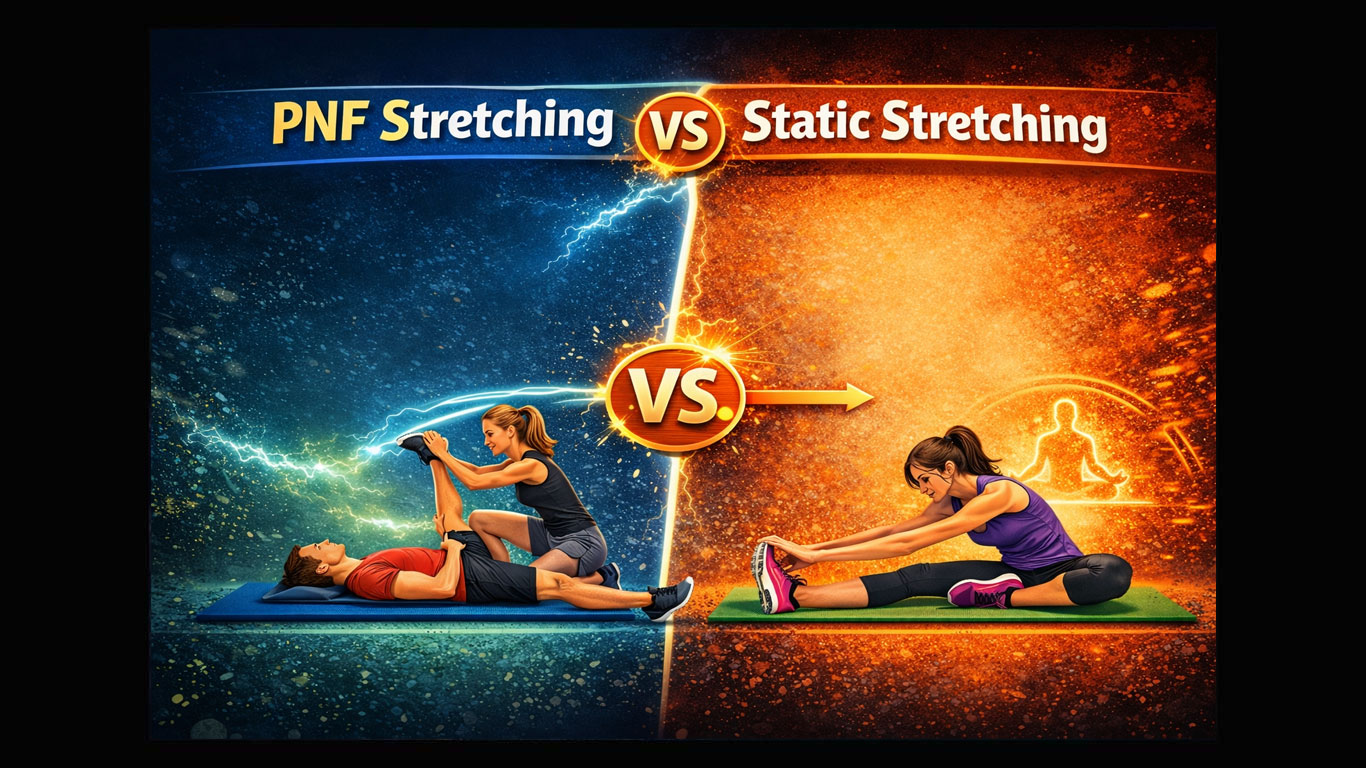
PNF Stretching vs. Static Stretching
� When to Use...
PNF (Proprioceptive Neuromuscular Facilitation) stretching is an advanced flexibility technique that combines muscle contraction and relaxation to achieve a deeper stretch. The method involves stretching a muscle, then actively contracting it, followed by a deeper stretch as the muscle relaxes. This process helps engage the nervous system, allowing muscles to release more effectively and extend their range of motion. Because of this, PNF stretching is highly effective for improving flexibility in a shorter period of time and is often used in athletic training and rehabilitation settings.
Static stretching, on the other hand, is a more traditional and widely used method that involves holding a stretch in a fixed position for a period of time, usually between 20 to 30 seconds. This type of stretching allows muscles to gradually lengthen and relax without any active contraction involved. Static stretching is simple and accessible, making it ideal for improving overall flexibility over time. It is most commonly used during cool-downs or recovery sessions, helping to reduce muscle tension, improve circulation, and promote relaxation after workouts.
While both methods improve flexibility, they serve different purposes depending on the situation. PNF stretching is best suited for those looking to make faster gains in flexibility or target specific muscle limitations, while static stretching is better for general flexibility, recovery, and injury prevention. Incorporating both techniques into a well-rounded program can provide the greatest overall benefit, allowing for both immediate improvements and long-term mobility gains.
Which One Is Better?
It depends on your goal.
Choose Static Stretching if:
You want to relax muscles You’re cooling down after training You’re new to flexibility work You want a low-risk, simple method
Choose PNF Stretching if:
You want faster flexibility gains You feel “tight” despite stretching You’re training for performance You want to improve range of motion quickly
MuscleRx Take: The Real Answer
This isn’t an either/or decision. The most effective approach is:
👉 Use static stretching for recovery
👉 Use PNF stretching for progress
Static stretching helps maintain flexibility. PNF stretching helps increase it.
The Hidden Problem Most People Miss
Most people stretch passively—but never challenge the muscle. That’s why they stay tight. If you only: hold stretches avoid discomfort never activate the muscle You’re missing the key driver of flexibility.
If your form breaks, your results break. Control the movement—control the outcome.