
 personal trainer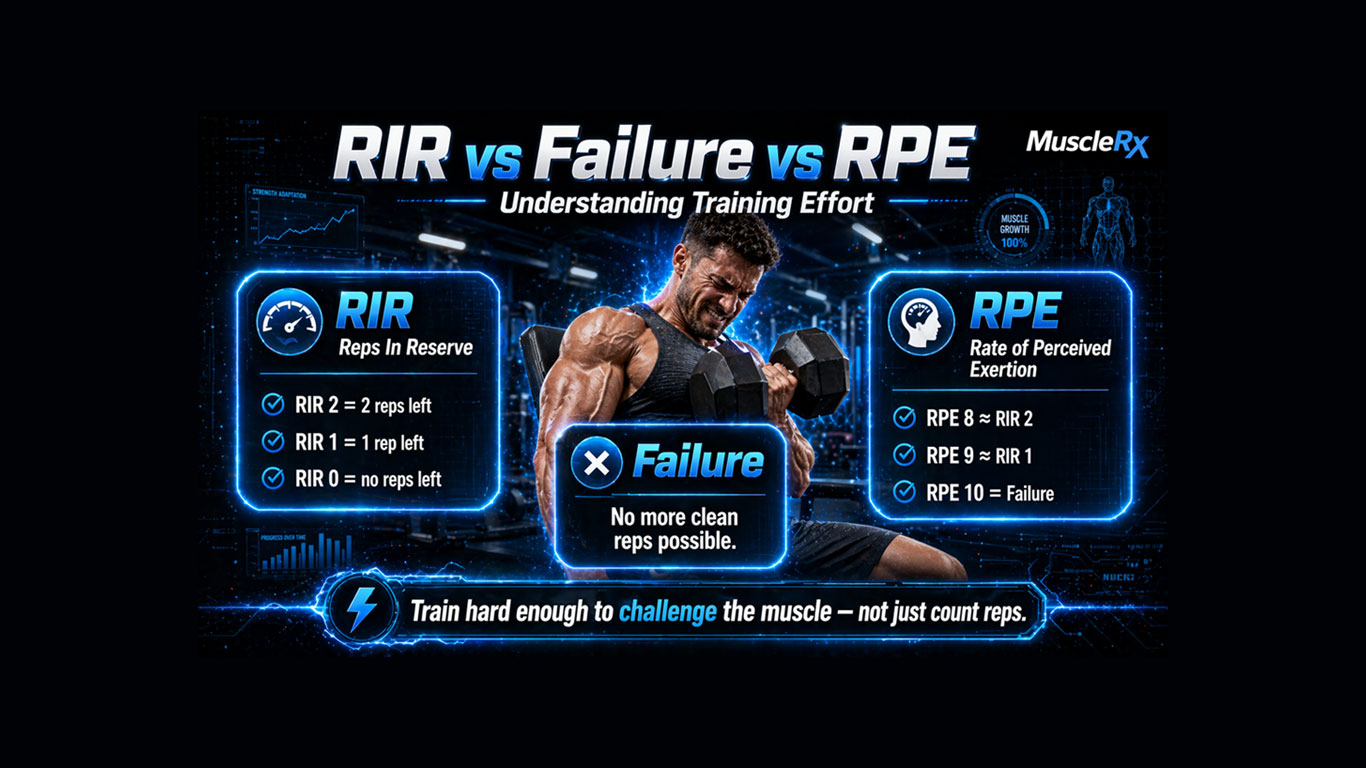
RIR vs Failure vs RPE
RIR vs Failure vs RPE: What It Actually Means in the Gym
A lot of lifters hear terms like RIR, failure, and RPE and immediately think training has become too complicated. But the truth is these are just different ways of describing one thing: how hard a set really was. If you understand the difference, your workouts get smarter, your effort gets more honest, and your results usually improve.
RIR stands for reps in reserve. It simply means how many more good reps you could have done before the set was over. If you finish a set and feel like you could have done two more clean reps, that set was RIR 2. If you could have done only one more, that was RIR 1. If you could not have done another clean rep at all, that was RIR 0. It is one of the most useful ways to judge effort because it keeps the focus where it belongs: how close you were to true muscular failure.
Failure is the point where you cannot complete another rep with good form. Not ugly form. Not a half rep. Not some bouncing, twisting, momentum-driven attempt. Real failure means the muscle is done producing another clean repetition. This is where people get confused. Many stop far before failure because the set starts to burn or slow down. Others think failure means total chaos. Neither is right. True failure is controlled and honest. It is not dramatic. It is just the point where another proper rep is not there.
RPE stands for rate of perceived exertion. It is another way to measure effort, but instead of asking how many reps you had left, it asks how hard the set felt on a scale, usually from 1 to 10. In lifting, RPE 10 means maximum effort, no reps left. RPE 9 usually means you had about one rep left. RPE 8 means about two reps left. So in practice, RPE and RIR are closely connected. RIR 1 is roughly RPE 9. RIR 2 is roughly RPE 8. They are just two languages describing the same training reality.
The reason this matters is because most people train with numbers, not effort. They decide ahead of time they are doing ten reps and stop at ten no matter what. That might mean the set was too easy. It might mean it was perfect. It might mean it was way too hard. The rep number alone does not tell the full story. RIR, failure, and RPE help explain what the set actually was. That is a much better way to train than blindly obeying numbers while ignoring what the body is telling you.
For muscle growth, a lot of productive training happens when you are reasonably close to failure. That usually means somewhere around RIR 0 to 2, or roughly RPE 8 to 10 depending on the exercise and the goal. You do not need to take every set to total failure, especially on exercises where failure can get sloppy or risky. But you do need to get close enough that the muscle is forced to work hard. That is where the stimulus comes from. Easy sets might feel productive because you are moving, sweating, and checking boxes, but they often do not do enough to force adaptation.
RIR is often easier to use for lifters who think in terms of reps. It gives a simple question to ask after the set: how many clean reps did I honestly have left? RPE is useful for people who prefer a broader effort scale and do not want to think in exact rep estimates. Failure is the final line both systems point toward. It is the endpoint. RIR and RPE are just ways of describing how close you got to it.
The problem is that many people are not very good at judging effort at first. Beginners often think a set was near failure when they actually had four or five reps left. That is normal. It takes experience to know the difference between discomfort and actual fatigue. But once you learn it, your training changes. Sets become more accurate. Progress becomes easier to track. And you stop wasting time with work that looks hard but is not hard enough to matter.
If you want a simple way to think about it, use this. RIR tells you how many reps you had left. RPE tells you how hard the set felt. Failure is the point where there are no reps left. Different terms, same goal: measuring effort honestly.
In the end, the body does not care whether you call it RIR, failure, or RPE. It responds to challenge. These tools just help you measure that challenge more accurately so your training is based on reality instead of guesswork.
Your body doesn’t care where your protein comes from—it cares that you show up and use it.