
 personal trainer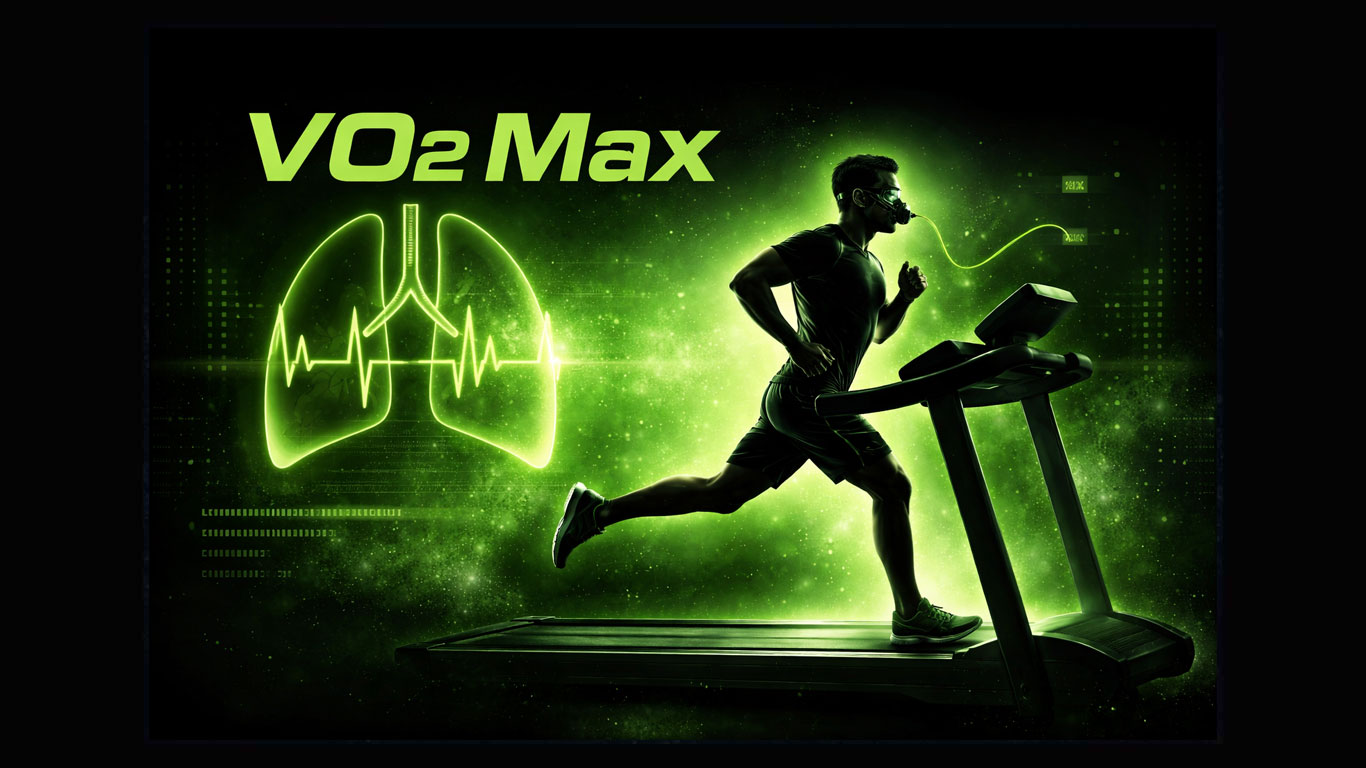
VO₂ Max
� VO₂ Max: What Your Cardio Fitness Says About You
Most people think of fitness in terms of strength—how much weight you can lift, how many reps you can complete, how hard you can push through a workout. But there’s another side of fitness that often goes overlooked, and it may be even more important: how efficiently your body uses oxygen.
That’s where VO₂ max comes in.
VO₂ max is a measure of the maximum amount of oxygen your body can utilize during intense exercise. In simpler terms, it reflects how well your heart, lungs, and muscles work together to keep you moving when the demand is highest. The higher your VO₂ max, the more oxygen your body can deliver and use—and the better your endurance.
But this isn’t just a number for elite athletes.
VO₂ max is one of the strongest indicators of overall fitness and long-term health. It’s closely tied to cardiovascular efficiency, stamina, and even longevity. People with higher VO₂ max levels tend to perform better physically, recover faster, and maintain a higher level of daily energy.
What makes VO₂ max so powerful is that it represents a complete system working together. Your heart must pump efficiently. Your lungs must bring in oxygen effectively. Your blood must transport it. And your muscles must use it. When all of these pieces are functioning well, your body becomes more capable under stress.
And when they’re not, you feel it.
You fatigue faster. Your breathing becomes labored sooner. Workouts feel harder than they should. That’s often not a sign of lack of effort—it’s a sign that your oxygen system needs improvement.
The good news is that VO₂ max is highly trainable.
One of the most effective ways to improve it is through high-intensity interval training (HIIT). Short bursts of intense effort followed by recovery periods force your body to adapt. Over time, your heart becomes stronger, your oxygen delivery improves, and your body learns to perform at higher levels for longer periods.
Steady-state cardio also plays a role, especially for building a base. But it’s the higher intensity work that pushes your VO₂ max upward.
You don’t need a lab to estimate your VO₂ max either. There are practical methods that give you a solid benchmark. A timed run, a one-mile walk test, or even heart rate-based calculations can provide insight into where you stand. These tests aren’t perfect, but they’re effective enough to track progress over time.
And progress is what matters.
Just like strength, VO₂ max isn’t static. It improves with consistent training and declines when ignored. That’s why incorporating cardio with purpose—not just going through the motions—can make a significant difference in how you feel and perform.
At MuscleRx, VO₂ max isn’t just about endurance. It’s about building a system that supports everything else you do. Better oxygen efficiency means better workouts, better recovery, and better overall performance.
Because it’s not just about how hard you can push for a moment— it’s about how long you can sustain it.
And in many ways, that’s the true measure of fitness.
Intensity builds strength. Consistency makes it last.