
 personal trainer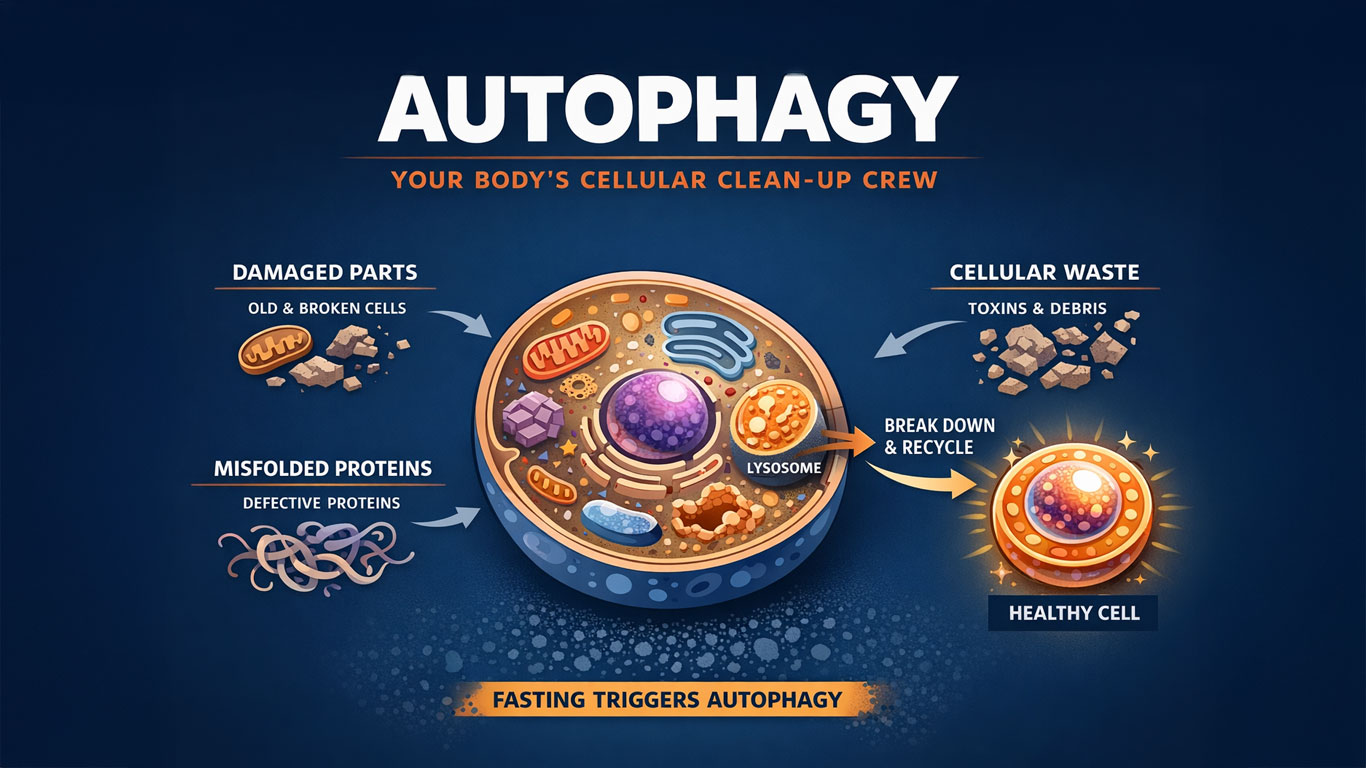
The Role of Autophagy in Intermittent Fasting
One of the most powerful—and often overlooked—benefits of intermittent fasting is a process called autophagy.
Autophagy, which literally means “self-eating,” is your body’s way of cleaning house at the cellular level. During periods of fasting, when the body is not focused on digesting food, it shifts attention toward repair and maintenance. Damaged cells, dysfunctional proteins, and cellular waste are broken down and recycled, allowing your body to function more efficiently.
Think of autophagy as a built-in reset system. Instead of allowing damaged components to accumulate, your body identifies what is no longer working properly and removes it. This process supports overall health, cellular efficiency, and long-term performance.
Fasting is one of the most effective natural triggers for autophagy. As insulin levels drop and energy availability changes, the body begins prioritizing internal repair processes. While the exact timing can vary from person to person, longer fasting windows—such as 16 hours or more—are generally associated with increased autophagic activity.
It’s important to understand that autophagy is not something you feel happening, but its effects are significant. Improved cellular function, better metabolic health, and enhanced recovery are all linked to this process. Over time, these benefits contribute to how your body looks, feels, and performs
However, more is not always better. Excessively long or aggressive fasting does not necessarily lead to greater benefits and can actually work against your goals if it interferes with proper nutrition and recovery. Like everything else in fitness, balance is key.
When used correctly, intermittent fasting doesn’t just help you burn fat—it helps your body operate at a higher level. Autophagy is one of the reasons why.
What Happens During a Fast
0–4 Hours (Fed State)
Your body is digesting food and using glucose for energy. Insulin levels are elevated, and fat burning is minimal.
4–8 Hours (Early Fasting)
Blood sugar begins to stabilize as your body starts transitioning away from recently consumed energy.
8–12 Hours (Glycogen Depletion Begins)
Your body starts using stored glycogen (carbohydrates stored in the liver and muscles) for fuel.
12–16 Hours (Fat Burning Increases)
As glycogen stores decrease, your body begins shifting more toward fat as its primary energy source.
16–18 Hours (Metabolic Shift)
Fat oxidation increases, and the body becomes more efficient at using stored energy.
18–24 Hours (Deeper Fasting State)
Processes like autophagy may become more active, and fat utilization continues to increase.
Discipline builds the body—consistency builds the life behind it