
 personal trainer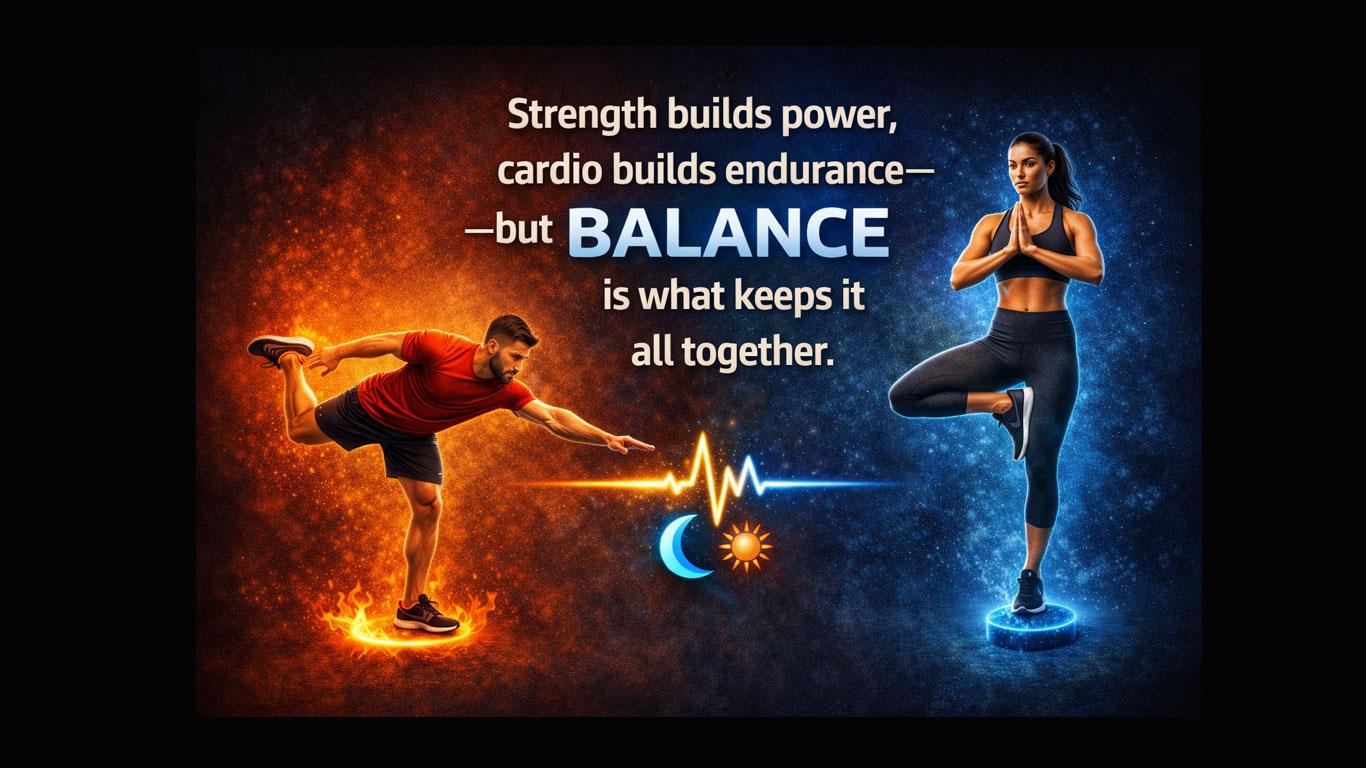
balance
� In the long term, improving balance contributes to longevity.
Balance is one of the most overlooked components of fitness, yet it plays a critical role in how we move, perform, and age. It’s easy to associate strength and cardio with progress, but without balance, those qualities don’t translate as effectively into real-world movement. Balance is what allows you to control your body, stabilize under load, and react to changes in position. It’s not just for athletes—it’s essential for everyone, from beginners to advanced lifters, and becomes even more important as we get older.
At its core, balance is the ability to maintain control of your body’s center of gravity over your base of support. This involves coordination between your muscles, joints, and nervous system. Your brain is constantly processing information from your eyes, inner ear, and body to keep you upright and stable. When balance is lacking, movements become less efficient, more energy is wasted, and the risk of injury increases. Improving balance strengthens this connection, making your movements smoother, more controlled, and more resilient.
One of the biggest benefits of improving balance is injury prevention. Many injuries occur not because of a lack of strength, but because of a lack of control. A misstep, a shift in weight, or an unstable landing can lead to strains, sprains, or worse. By training balance, you improve your body’s ability to react quickly and stabilize itself, reducing the likelihood of these incidents. This is especially important for the ankles, knees, and hips, which are often the first points of failure when stability is compromised.
Balance also enhances overall performance. Whether you’re lifting weights, running, or playing sports, better balance means better force transfer and control. In strength training, it allows you to maintain proper form and engage the correct muscles. In cardio and athletic movements, it improves coordination and efficiency. Even simple exercises like squats and lunges become more effective when your body is stable and aligned.
Improving balance does not require complicated routines, but it does require intention. A good starting point is incorporating single-leg exercises into your workouts. Movements like single-leg deadlifts, split squats, and step-ups challenge your stability while building strength. Even standing on one foot for short periods can be effective, especially if you progress by closing your eyes or standing on an unstable surface.
Another important element is strengthening your core. Your core acts as the stabilizing center of your body, and a strong core makes it easier to control movement and maintain alignment. Exercises like planks, dead bugs, and bird dogs help build this foundation. Mobility also plays a role—tight joints can limit your ability to adjust and stabilize, so maintaining good range of motion in your ankles, hips, and shoulders is key.
Balance training can also be integrated into your warm-up. Simple drills like heel-to-toe walks, lateral movements, or controlled reaches can activate stabilizing muscles and prepare your body for more demanding exercises. Over time, these small additions create noticeable improvements in how you move and feel.
In the long term, improving balance contributes to longevity. As we age, balance naturally declines, which increases the risk of falls and injuries. By training it consistently, you maintain independence, confidence, and the ability to move freely. It’s not just about performance—it’s about quality of life.
Balance is not something you train once and forget. It’s a skill that improves with practice and consistency. The more you challenge your stability, the more your body adapts. When you invest in balance, you’re not just improving one aspect of fitness—you’re enhancing everything that depends on it.
Strength builds power, cardio builds endurance—but balance is what keeps it all together.