
 personal trainer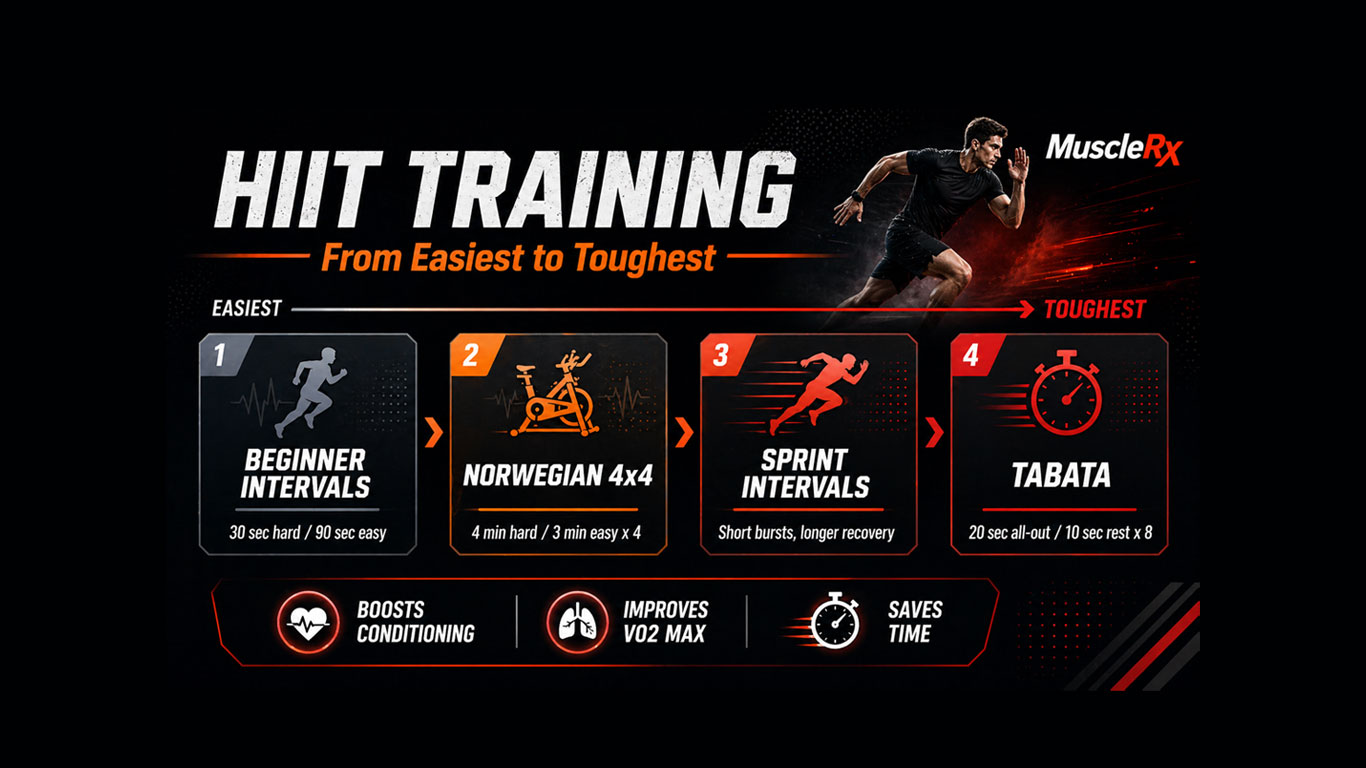
High Intensity Interval Training
HIIT Training: Fast, Effective, and Not All Created Equal
HIIT gets talked about like it is one thing, but it is really a category. High-intensity interval training simply means alternating hard work with planned recovery. That is the foundation. What changes is how hard you go, how long you work, how long you rest, and how repeatable the method is.
That matters, because some HIIT methods are realistic for the average person, while others are downright punishing. Some are easier to pace. Some are easier to recover from. Some are more science-driven. Some are more hype-driven.
The good news is that HIIT can be incredibly effective. It can improve cardiovascular fitness, raise VO2 max, burn a lot of energy in a short amount of time, improve insulin sensitivity, and make you more conditioned without living on a treadmill for an hour. The bad news is that many people either make it too random, too hard, or too frequent.
The best HIIT method is not the one that sounds the most extreme. It is the one you can do well, recover from, and repeat consistently.
Beginner Intervals: The Best Place to Start
The easiest HIIT approach is simple interval work. Think thirty seconds hard, ninety seconds easy. Or one minute hard, two minutes easy. This is where most people should begin.
The reason is simple. These intervals are hard enough to challenge the heart and lungs, but controlled enough that you can maintain decent pacing and form. You do not need elite conditioning to get through them, and you do not have to guess what “all out” means. This makes them practical, repeatable, and far less intimidating than advanced protocols.
For most general fitness goals, this style of HIIT is underrated. It may not sound sexy, but it works.
Norwegian 4x4: The Smart Workhorse
The Norwegian 4x4 method has become one of the most respected interval protocols for improving cardiovascular fitness. The structure is usually four minutes of hard work followed by three minutes of easier recovery, repeated four times.
This method is demanding, but it is not chaotic. The effort is high, yet sustainable. You are not sprinting blindly. You are working in a controlled, challenging zone long enough to place a serious demand on the cardiovascular system. That is one reason it is often associated with strong improvements in VO2 max.
What makes the Norwegian 4x4 so effective is also what makes it easier to follow than more brutal HIIT methods. The work intervals are long enough to find rhythm, and the recovery is long enough to reset. It is still tough, but it is organized tough.
For many people, this is one of the best HIIT methods available.
Classic Sprint Intervals: Harder Than They Look
Sprint intervals are where HIIT starts getting more aggressive. These might look like fifteen seconds all out with forty-five seconds recovery, or thirty seconds hard with sixty to ninety seconds easy.
This style demands more explosiveness and more honesty. If you are truly sprinting, the effort climbs fast. Recovery matters more. Technique matters more. Fatigue builds differently than in longer intervals because the intensity is higher and the margin for error is smaller.
Sprint intervals can be highly effective, but they are also easier to misuse. Many people go too hard too early, lose quality quickly, and turn the workout into sloppy survival. When done well, they are excellent. When done poorly, they are just exhausting.
Tabata: Short, Famous, and Brutal
Tabata is probably the most recognized HIIT name, but it is also one of the most misunderstood. Real Tabata is twenty seconds of all-out work followed by ten seconds of rest, repeated for eight rounds. Total time: four minutes.
That sounds manageable until you do it properly.
Real Tabata is not just fast intervals. It is an all-out effort packed into a very short recovery structure. There is almost nowhere to hide. If the intensity is honest, it becomes one of the most brutal interval methods in fitness.
This is where people get fooled. Many workouts get labeled “Tabata” just because they use a twenty-on, ten-off timer. But if the intensity is not truly high, it is not really the same thing. Real Tabata is not beginner-friendly. It is short, but it is savage.
Bike, Row, Hill, and Treadmill HIIT: The Tool Matters
HIIT is not just about the timing method. It is also about the equipment or movement you use. Bike intervals tend to be more joint-friendly and easier to recover from than all-out running sprints. Rowing intervals can be effective, but they demand technique. Hill sprints can reduce impact compared to flat sprinting while still being brutally effective. Incline treadmill intervals give people a controlled way to work hard without needing track-speed mechanics.
This matters because the best HIIT plan is not just about work and rest periods. It is about matching the method to the person. Someone with cranky knees may do much better on a bike. Someone with good running mechanics may thrive with hill repeats. Someone new to interval work may need treadmill or bike structure before trying sprint protocols.
The method is only as good as your ability to do it well.
The Benefits of HIIT
When used properly, HIIT can improve aerobic capacity, anaerobic conditioning, cardiovascular health, work capacity, and overall fitness in less time than traditional steady-state cardio. It can help you get more out of shorter sessions, and for people who hate long cardio, that is a huge advantage.
HIIT also teaches effort. It forces you to work, recover, and work again. That skill carries over into sports, strength training, and everyday life. You become better at handling discomfort and better at recovering from it.
But the benefits only show up when the sessions are structured and the effort is appropriate. Random hard exercise is not the same as quality interval training.
The Problem With HIIT
HIIT gets overused because it is efficient and popular. People start doing it too often, too hard, and with no regard for recovery. That is where problems start. Too much HIIT can leave you drained, interfere with strength training, beat up your joints, and make every workout feel like a punishment.
HIIT is a tool. It is not the entire program.
Most people do not need it every day. In fact, most people would benefit more from doing it well two or three times a week than doing it badly six days a week.
Easiest to Toughest HIIT Methods
If you ranked common HIIT styles from easiest to toughest to follow, a simple beginner interval format is usually the easiest. It is controlled, flexible, and repeatable.
Next would be the Norwegian 4x4. It is challenging, but it has structure and rhythm. You can settle in and work.
After that come classic sprint intervals. These require more intensity, more control, and more recovery awareness.
At the hardest end is true Tabata. It is short, but the difficulty is extreme when done properly. It is the kind of workout people underestimate until they actually do it honestly.
The Bottom Line
HIIT works. That is not the question.
The real question is which HIIT method fits your current conditioning, your recovery ability, and your long-term goals. For most people, the smartest answer is not the hardest protocol. It is the one that lets them train hard, stay consistent, and come back for the next session stronger instead of trashed.
The best HIIT method is the one you can execute honestly and recover from properly.
Not the one with the coolest name. Not the one that leaves you crawling. The one that actually makes you fitter.
If you want, I can also create a matching MuscleRx graphic for this article with the headline and the four HIIT methods visually ranked from easiest to toughest.
HIIT doesn’t reward comfort—it rewards effort.