
 personal trainer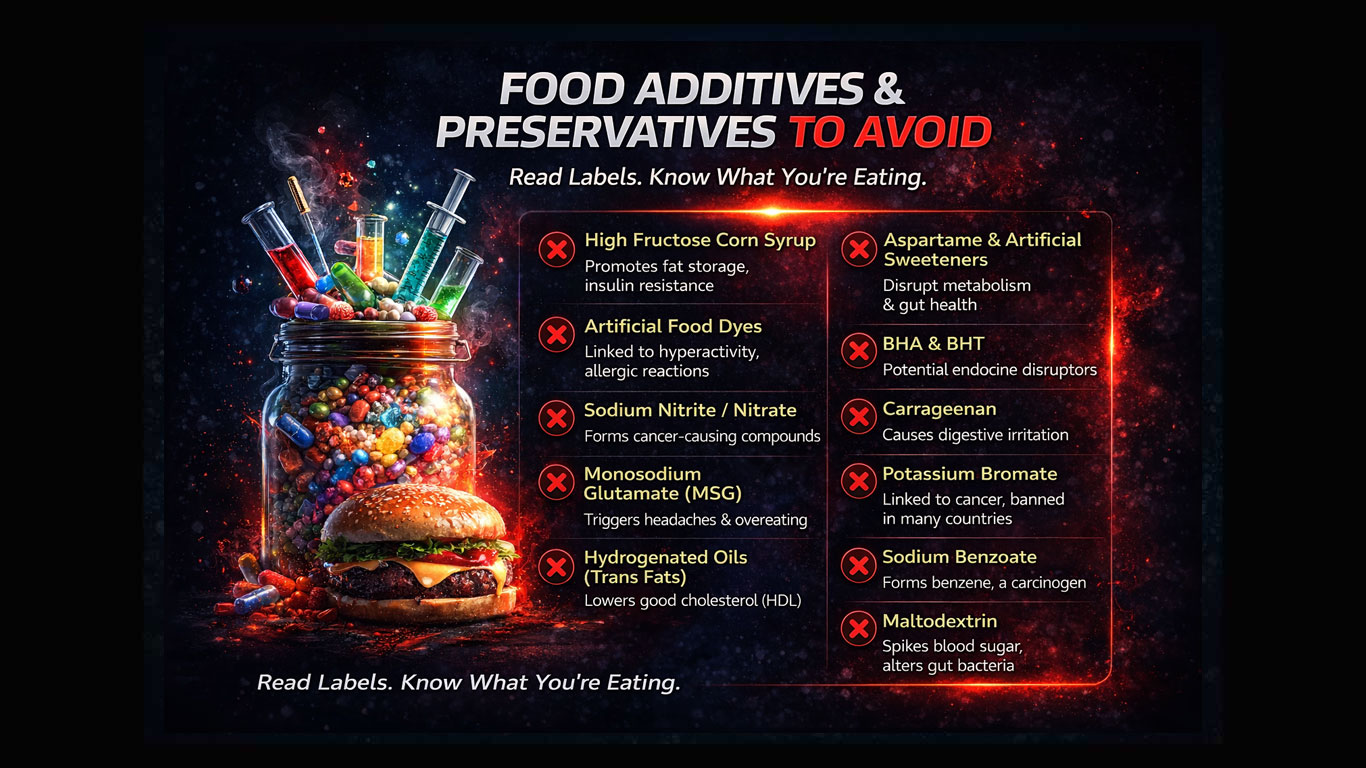
Food Additives & Preservatives
� Food Additives & Preservatives to Avoid (And What They Do to Your Body)
Walk through any grocery store and flip over a few labels—you’ll quickly realize that most packaged foods are less about food and more about chemistry. Ingredients you can’t pronounce, numbers instead of names, and substances designed more for shelf life than human health.
The truth is, many of these additives and preservatives aren’t there to nourish you—they’re there to enhance flavor, improve texture, extend expiration dates, and increase profit margins. While small amounts may be considered “safe,” consistent exposure adds up. And over time, these compounds can impact digestion, energy levels, inflammation, and overall health.
If you want to take control of your nutrition, it starts with knowing what to avoid
Common Additives & Preservatives to Watch For
1. High Fructose Corn Syrup (HFCS) A highly processed sweetener found in sodas, snacks, and condiments.
What it does:
Spikes blood sugar, promotes fat storage, and is linked to insulin resistance and metabolic issues.
2. Artificial Food Dyes (Red 40, Yellow 5, Blue 1) Synthetic color additives used to make food look more appealing.
What they do:
Linked to hyperactivity in children, potential allergic reactions, and may contribute to inflammation.
3. Sodium Nitrite / Sodium Nitrate Commonly found in processed meats like bacon, hot dogs, and deli meats.
What they do:
Can form harmful compounds (nitrosamines) in the body, which are associated with increased cancer risk.
4. Monosodium Glutamate (MSG) A flavor enhancer used in many packaged and restaurant foods.
What it does:
May cause headaches, sweating, and sensitivity reactions in some people; can also encourage overeating.
5. Hydrogenated Oils (Trans Fats) Used to improve shelf life and texture in baked goods and fried foods.
What they do:
Increase bad cholesterol (LDL), lower good cholesterol (HDL), and raise the risk of heart disease.
6. Aspartame & Artificial Sweeteners Found in diet sodas, sugar-free products, and low-calorie foods.
What they do:
Can disrupt gut health, increase cravings, and may negatively affect metabolism over time.
7. BHA & BHT (Butylated Hydroxyanisole / Hydroxytoluene) Preservatives used to prevent fats from spoiling.
What they do:
Potential endocrine disruptors; some studies suggest possible links to cancer.
8. Carrageenan A thickening agent often found in dairy alternatives and processed foods.
What it does:
May cause digestive irritation, bloating, and inflammation in some individuals.
9. Potassium Bromate Used in bread products to improve texture and rise.
What it does:
Linked to kidney and thyroid issues; banned in many countries.
10. Sodium Benzoate A preservative used in soft drinks, salad dressings, and sauces.
What it does:
Can form benzene (a known carcinogen) when combined with vitamin C under certain conditions.
11. Maltodextrin A processed carbohydrate used as a filler or thickener.
What it does:
Rapidly spikes blood sugar and can negatively impact gut bacteria.
12. Polysorbate 80 An emulsifier found in ice cream, sauces, and processed foods.
What it does:
May disrupt gut lining and contribute to inflammation.
Why This Matters
You don’t need to be perfect. You don’t need to eliminate every single additive overnight. But awareness changes behavior.
The more you shift toward whole, minimally processed foods, the less you expose your body to substances that don’t serve it. Over time, this leads to better digestion, more stable energy, improved recovery, and better overall performance.
Because just like your workouts—what you put into your body determines what you get out of it.
The Simple Rule
If the ingredient list looks like a science experiment… it probably doesn’t belong in your body.
If the ingredient list looks like a science experiment… it probably doesn’t belong in your body.