
 personal trainer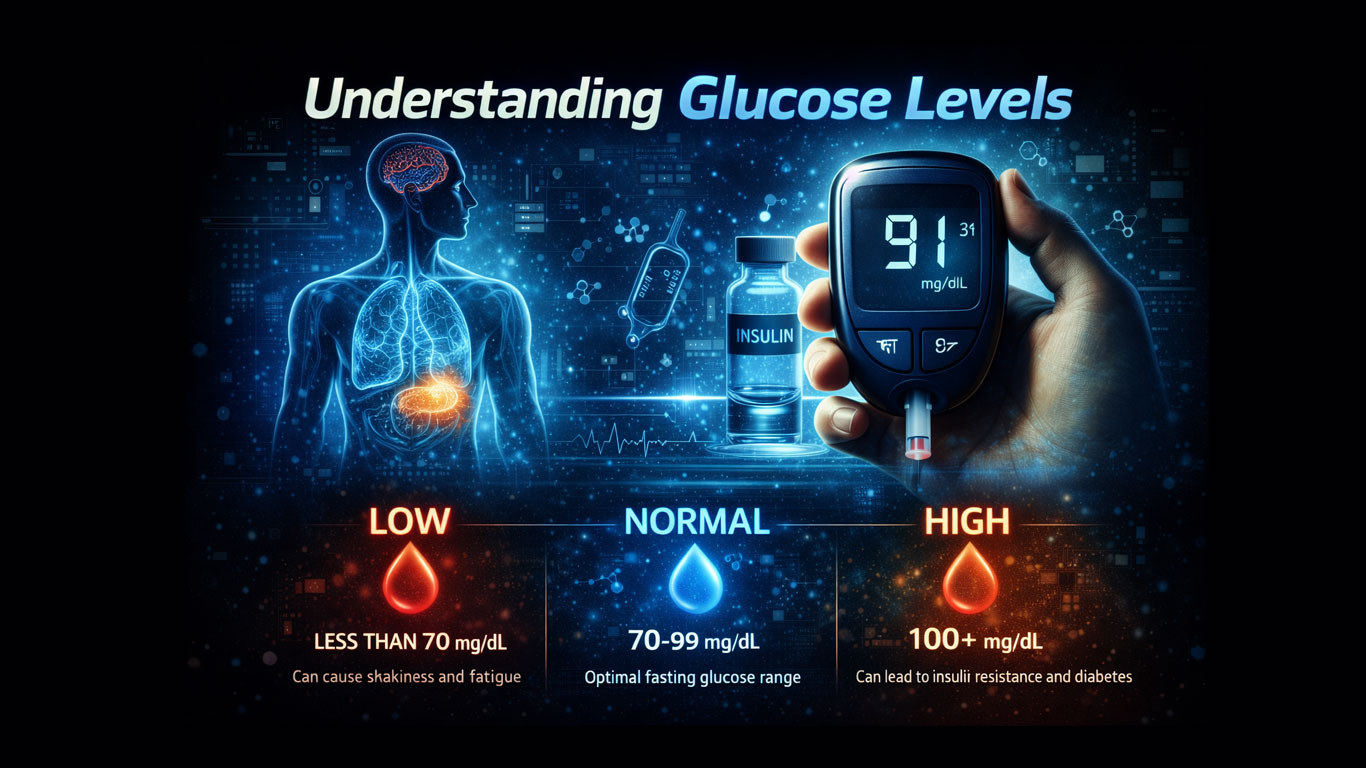
Understanding Glucose Levels
What’s Normal, and What’s Worrisome?
Glucose is not just a lab number. It is fuel. Your body uses it to power everything from your brain to your workouts, and when glucose regulation starts drifting out of line, performance, recovery, energy, mood, and long-term health can all take a hit. That is why blood sugar matters even for people who do not think of themselves as “diabetic.” Stable glucose generally means steadier energy, better training consistency, and fewer crashes. Poor glucose control often shows up first in ways people overlook, such as brain fog, mid-afternoon fatigue, increased hunger, stubborn body-fat loss, and a general feeling that the engine is not running as clean as it should. Screening ranges used by the CDC and NIDDK define normal fasting blood glucose as under 100 mg/dL, prediabetes as 100 to 125 mg/dL, and diabetes at 126 mg/dL or higher when appropriately confirmed. For A1C, normal is below 5.7%, prediabetes is 5.7% to 6.4%, and diabetes is 6.5% or higher.
For fitness-minded people, the biggest mistake is assuming that only extreme numbers matter. They do not. A fasting glucose of 103 mg/dL is not an emergency, but it is not ideal either. It sits in the prediabetes range, which means your body may already be showing signs that it is not handling blood sugar as efficiently as it should. The CDC notes that prediabetes raises the risk of developing type 2 diabetes, heart disease, and stroke. In a practical sense, that can also mean your nutrition timing, body-composition efforts, and energy management are working against more metabolic friction than you realize.
This is where context matters. If you train hard, a single glucose reading should never be interpreted in isolation. Food intake, training timing, sleep debt, stress, illness, and even a bad night of recovery can influence short-term readings. But patterns are where the real story lives. If fasting blood sugar keeps creeping upward, if A1C keeps drifting, or if you feel like you are constantly riding highs and lows in appetite and energy, that is worth paying attention to. Normal is not just “not sick.” Normal is your system handling fuel efficiently and predictably.
For people who already have diabetes, the goal shifts from diagnosis to management. NIDDK notes that for many people with diabetes, a common target range is 70 to 180 mg/dL, and time spent in that range becomes an important measure of control. That is useful because it reminds people that glucose is dynamic. It moves. The aim is not perfection every minute. The aim is staying in a safer, more stable range most of the time.
Low glucose deserves respect because it can affect performance and safety very quickly. Blood sugar below 70 mg/dL is considered low, and when it drops far enough it can cause shakiness, sweating, rapid heartbeat, confusion, dizziness, blurred vision, and in severe cases loss of consciousness or seizures. That matters in everyday life, but it matters even more around exercise, driving, and anything requiring coordination or quick decisions. In a training environment, “pushing through it” is not toughness if the issue is low blood sugar. It is a risk.
High glucose becomes more concerning when it is persistent, when it keeps showing up in screening ranges associated with prediabetes or diabetes, or when it climbs into levels associated with acute illness. Mayo Clinic advises extra caution once blood sugar is above 240 mg/dL, especially if ketones are present, and notes that persistently staying above 300 mg/dL can require urgent medical attention. At that point, the issue is no longer just nutrition quality or meal timing. It may signal a medical problem that needs prompt care.
The fitness takeaway is simple. Glucose is a health marker, but it is also a performance marker. If your numbers are normal, that supports better energy control and long-term metabolic health. If they are drifting into prediabetes territory, that is not a cue to panic, but it is a cue to stop ignoring the dashboard. Training consistently, improving body composition, sleeping better, eating with more structure, and reducing excess body fat can all matter here, and NIDDK notes that lifestyle change can prevent or delay type 2 diabetes in many people with prediabetes.
The best mindset is not fear. It is awareness. Know your fasting glucose. Know your A1C. Pay attention to trends, not just one-off readings. If your blood sugar is normal, keep doing the basics well. If it is borderline, treat that as useful information, not background noise. And if the numbers are clearly high or paired with symptoms, do not try to out-train a medical problem. Get it checked.
Your body doesn’t care where your protein comes from—it cares that you show up and use it.