
 personal trainer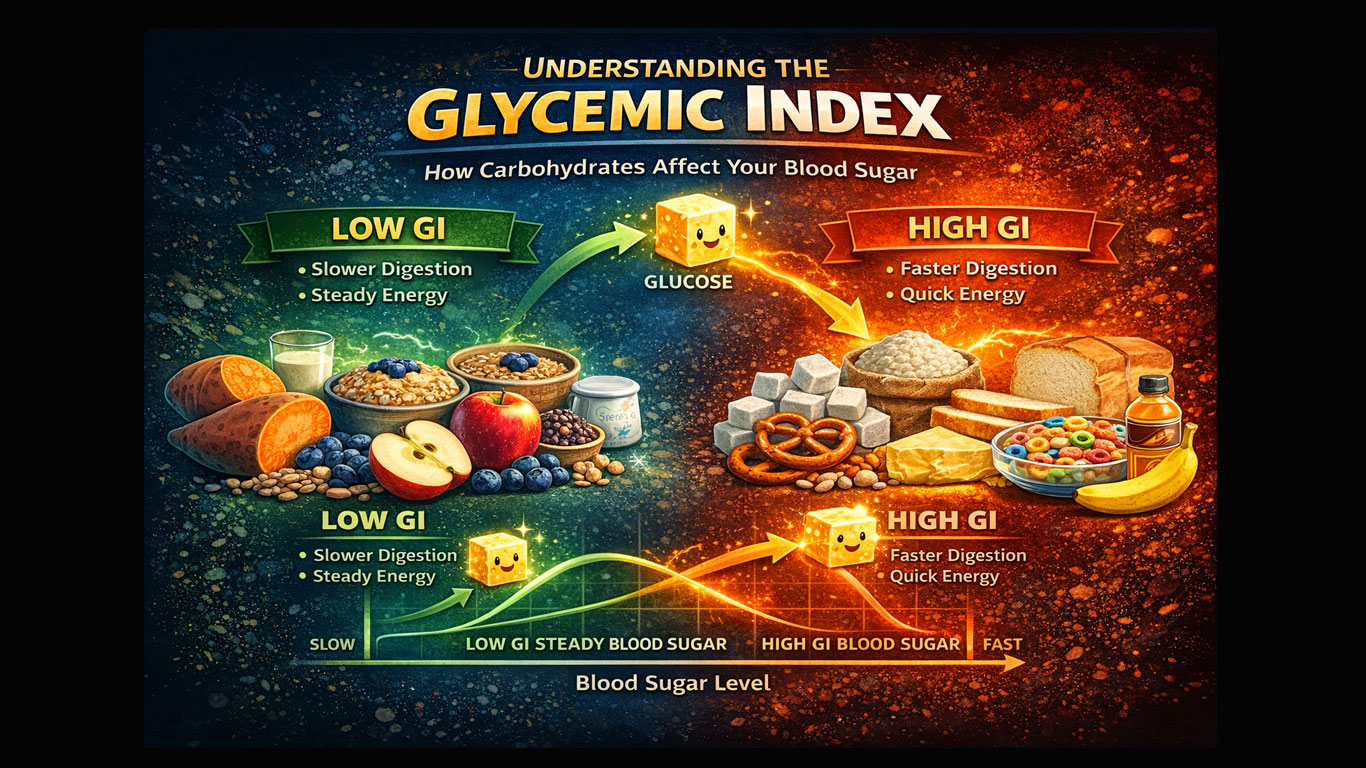
The glycemic index ranks carbohydrate foods
� A simple way to understand how different carbohydrate foods affect your blood sugar.
Glycemic Index Table
The glycemic index ranks carbohydrate foods by how quickly they raise blood sugar. Lower-GI foods digest more slowly, while higher-GI foods are absorbed faster.
| Category | GI Range | Common Foods | What It Means |
|---|---|---|---|
| Low GI | 55 or less | Oats, lentils, chickpeas, black beans, apples, pears, berries, sweet potatoes, quinoa, plain yogurt, most non-starchy vegetables | Slower digestion, steadier blood sugar, longer-lasting energy, better appetite control |
| Medium GI | 56–69 | Brown rice, couscous, whole wheat products, pineapple, bananas, table sugar, basmati rice | Moderate rise in blood sugar, can work well depending on meal timing and what the food is paired with |
| High GI | 70 or more | White bread, white rice, potatoes, corn flakes, rice cakes, pretzels, sports drinks, sugary cereals, pastries | Faster blood sugar spike, quicker energy, but more likely to lead to a crash if eaten alone or in large amounts |
The glycemic index gives you a simple way to understand how different carbohydrate foods affect your blood sugar and energy levels. Lower-GI foods break down more slowly, providing a steady release of energy that helps support focus, performance, and appetite control. Higher-GI foods, on the other hand, are digested quickly and can cause rapid spikes in blood sugar followed by noticeable drops. Neither is inherently “good” or “bad”—the key is knowing when and how to use each. For most meals, emphasizing lower-GI foods can help create more consistent energy throughout the day.
Common Foods & Glycemic Index Values
These are approximate glycemic index (GI) values. Actual impact can vary based on preparation, ripeness, and food combinations.
| Food | GI Value | Category | Notes |
|---|---|---|---|
| White Bread | 75 | High | Rapid spike, low fiber |
| Brown Rice | 68 | Medium | Slower than white rice, still moderate |
| White Rice | 73 | High | Quick digestion, common staple |
| Sweet Potato | 54 | Low | Fiber helps slow absorption |
| Oatmeal | 55 | Low | Great for sustained energy |
| Apple | 36 | Low | High fiber, slow digestion |
| Banana (ripe) | 62 | Medium | Ripeness increases GI |
| Watermelon | 76 | High | High GI but low overall carb load |
| White Potato | 78 | High | Cooking method affects GI |
| Lentils | 32 | Low | Very stable blood sugar response |
| Chickpeas | 28 | Low | Excellent for sustained energy |
| Greek Yogurt (plain) | 35 | Low | Protein slows glucose release |
| Cornflakes | 81 | High | Highly processed, fast spike |
| Quinoa | 53 | Low | Balanced carb + protein source |
| Honey | 61 | Medium | Natural sugar but still impacts blood sugar |
| Rice Cakes | 82 | High | Very fast digestion, little fiber |
The glycemic index gives you a simple way to understand how different carbohydrate foods affect your blood sugar and energy levels. Lower-GI foods break down more slowly, providing a steady release of energy that helps support focus, performance, and appetite control. Higher-GI foods, on the other hand, are digested quickly and can cause rapid spikes in blood sugar followed by noticeable drops. Neither is inherently “good” or “bad”—the key is knowing when and how to use each. For most meals, emphasizing lower-GI foods can help create more consistent energy throughout the day.
Control your fuel, control your energy, control your results.