
 personal trainer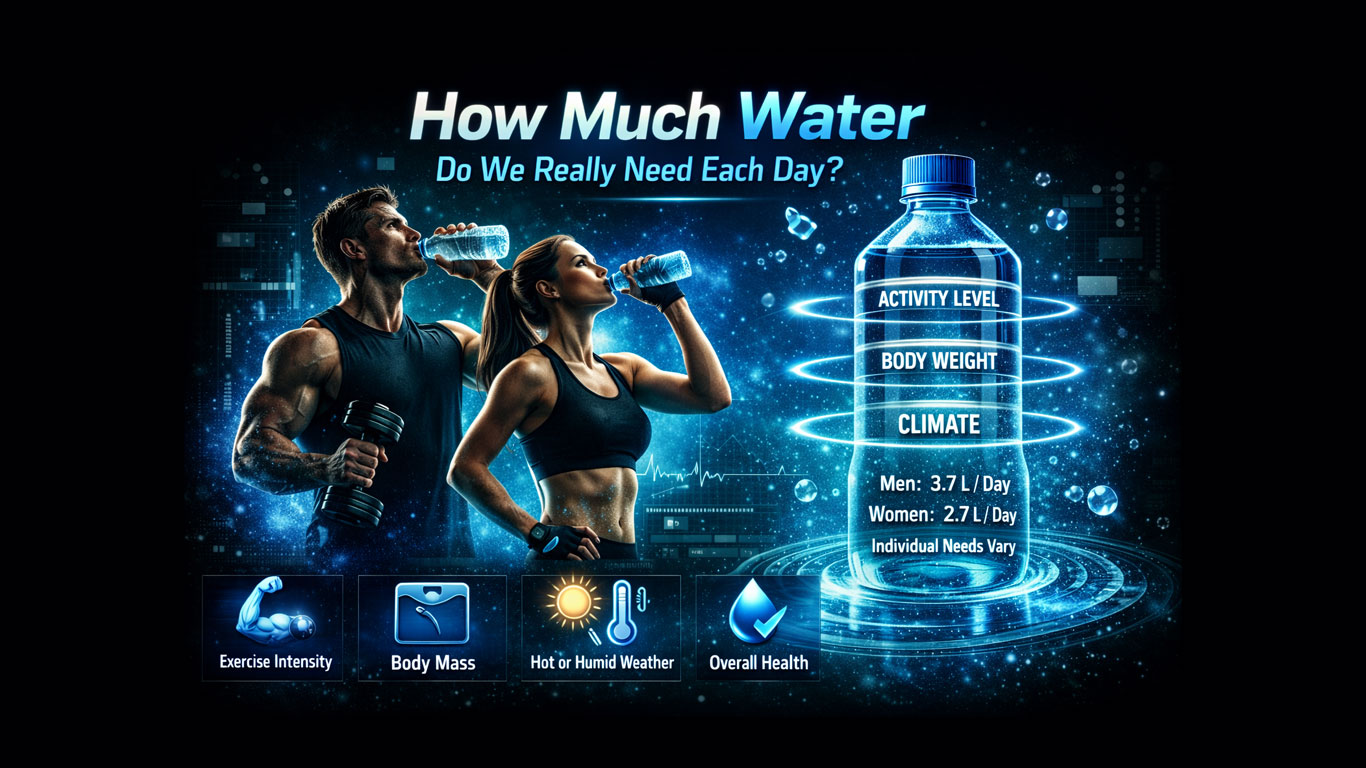
How Much Water
How Much Water Do We Really Need Each Day?
For something so simple, water creates a lot of confusion. One person swears by a gallon a day, another follows the old “eight glasses” rule, and someone else drinks only when they feel thirsty. The truth is less dramatic and more useful: there is no single perfect number for everyone. Your daily fluid needs depend on your body size, activity level, climate, and health. Broad guidance for healthy adults often lands around 13 cups of total fluids a day for men and 9 cups for women, while the NHS uses a simpler everyday guide of 6 to 8 cups or glasses for most people. The important part is understanding that these are guides, not rigid quotas.
Another big misconception is that all of that fluid has to come from plain water. It does not. Water is a great default, but tea, coffee, milk, and other beverages can also contribute to hydration. On top of that, both Harvard and Mayo Clinic note that about 20% of daily water intake typically comes from food, especially fruits and vegetables. That means hydration is not just about what you drink. It is also about what you eat throughout the day.
This is where high-water foods become surprisingly helpful. Cucumbers are more than 96% water, iceberg lettuce is about 96% water, celery is about 95% water, tomatoes are about 95% water, and zucchini is almost 95% water. Watermelon comes in at roughly 92% water, while strawberries hover above 90%. Bell peppers are typically more than 92% water, and even cauliflower is around 92% water. In practical terms, that means a salad packed with lettuce, cucumber, tomatoes, and peppers is not just a light meal. It is also a hydration strategy.
It also helps to think in terms of real meals instead of just percentages. A breakfast with yogurt and strawberries, a lunch salad with lettuce, cucumbers, tomatoes, and bell peppers, or a snack of celery and watermelon all move you closer to your hydration needs. Mayo Clinic also points to cantaloupe, cabbage, squash, strawberries, and watermelon as foods that are especially water-rich. When people say they struggle to drink enough during the day, the answer is often not “force down more water,” but “build more water-rich foods into your routine.”
Of course, some days require more than others. If you are exercising hard, working outside, spending time in hot or humid weather, or dealing with illness such as fever, vomiting, or diarrhea, your fluid needs go up. Pregnancy and breastfeeding can increase needs too. That is why a fixed daily target can sometimes be misleading. A much better real-world checkpoint is how you feel and, more practically, whether your urine is a pale yellow color rather than dark and concentrated.
The best takeaway is this: you probably do not need to obsess over hitting a trendy number, but you also should not ignore hydration and hope for the best. Water should still be your anchor, but foods like cucumbers, lettuce, celery, tomatoes, bell peppers, watermelon, strawberries, zucchini, and even cauliflower can make a meaningful difference. Hydration is less about chasing a gallon challenge and more about steady habits across the day. Drink regularly, eat water-rich foods often, and let consistency do the work.
Yes — here’s a simple table you can use. These are approximate water-content percentages by weight, and they can change with preparation method, brand, and cooking style, so I included the food form as listed. USDA FoodData Central is the underlying source for these entries.
Water Content of Common Foods
Hydration does not come only from what you drink. Many foods, especially fruits and vegetables, contain significant amounts of water.
| Food | Form | Water Content |
|---|---|---|
| Celery | Raw | 96.1% |
| Cucumber | Raw, with peel | 95.6% |
| Tomato | Raw | 95.0% |
| Watermelon | Raw | 91.7% |
| Strawberries | Raw | 91.3% |
| Broccoli | Raw | 90.1% |
| Nonfat Greek yogurt | Plain | 85.7% |
| Potato | Raw, flesh and skin | 80.1% |
| Sweet potato | Baked | 76.8% |
| Hard-boiled egg | Cooked | 75.4% |
| Firm tofu | Plain | 70.8% |
| Chicken breast | Roasted | 65.4% |
| Salmon | Cooked | 64.0% |
| Skirt steak | Grilled | 53.8% |
| Cheddar cheese | Regular | 38.2% |
Your body doesn’t care where your protein comes from—it cares that you show up and use it.