
 personal trainer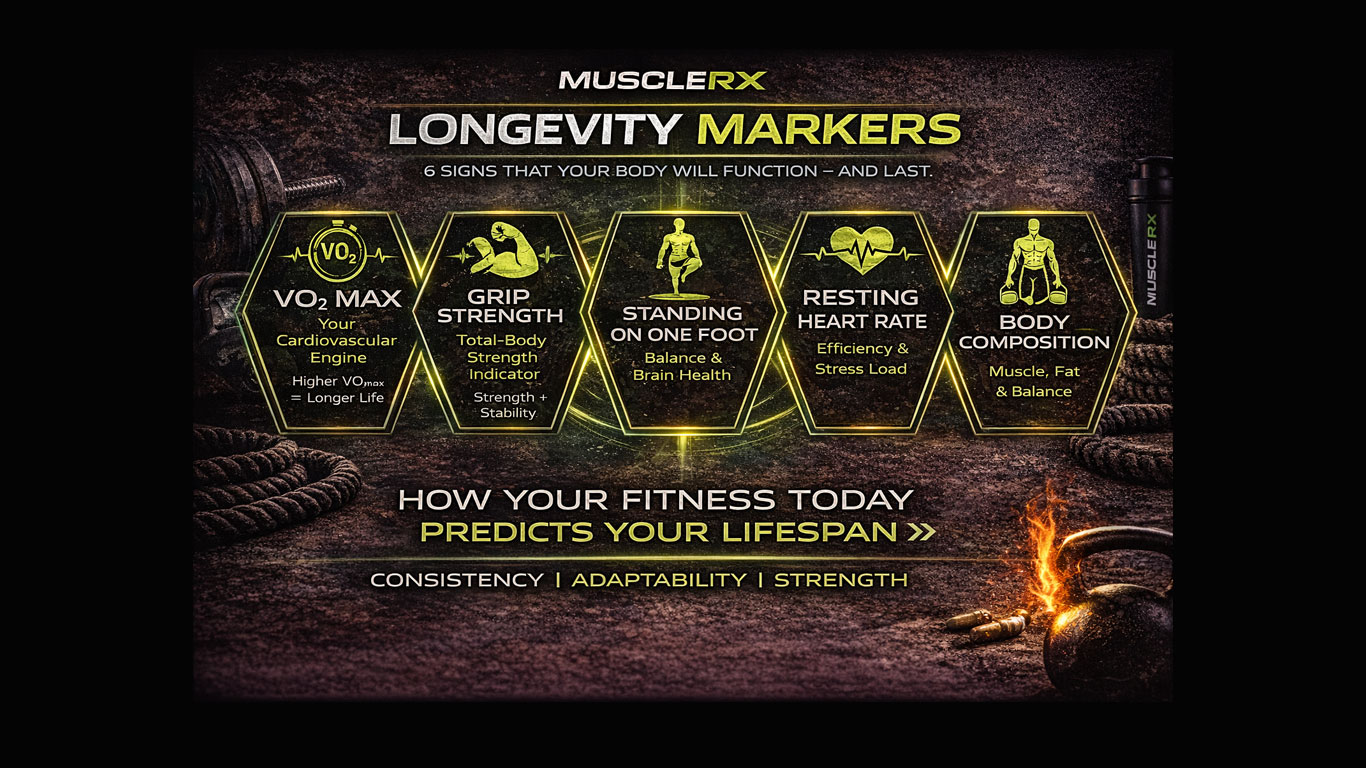
Longevity Markers
� What Your Fitness Says About How Long You’ll Live
Most people train for how they look. Some train for performance. But very few train for what actually matters most—how long, and how well, they’ll live.
Longevity isn’t just about genetics. It’s about measurable, trainable markers that reflect how your body is functioning today and how it will perform years from now. The reality is simple: your daily habits are quietly shaping your future, whether you realize it or not.
Longevity markers aren’t abstract concepts or complicated medical metrics. They are real-world capabilities your body either has—or doesn’t. They show up in how you move, how you recover, how you stabilize yourself, and how efficiently your body operates under stress. And the most important part is that every one of these markers can be improved.
One of the most powerful indicators is VO₂ max, which measures how efficiently your body uses oxygen during exercise. Think of it as your cardiovascular engine. A higher VO₂ max is strongly associated with lower mortality risk, better heart health, and higher energy levels. On the flip side, a low VO₂ max is one of the strongest predictors of early death. When your engine is weak, everything else in your body becomes harder.
Grip strength may seem like a small detail, but it’s one of the most telling markers of overall health. Research consistently links lower grip strength with a higher risk of early mortality. This isn’t just about hand strength—it reflects total-body strength, nervous system function, and your body’s overall ability to generate force. It’s a simple measure with surprisingly deep meaning.
Then there’s the farmer’s walk—one of the most basic yet revealing movements you can perform. Picking up heavy weight and walking challenges your grip, your core, your posture, and your cardiovascular system all at once. It represents real-world strength: the ability to carry, stabilize, and move under load. These are the kinds of abilities that matter as you age.
Balance is another overlooked but critical marker. Something as simple as standing on one foot can reveal a lot about your body’s stability and coordination. If this is difficult, it may indicate weak stabilizing muscles or declining neuromuscular control. Balance is closely tied to fall risk, brain health, and long-term independence. When balance declines, so does your ability to move confidently through everyday life.
Resting heart rate offers another clear signal of your body’s efficiency. A lower resting heart rate generally indicates a stronger, more efficient cardiovascular system, while a higher rate suggests your heart is working harder than it should. For most well-conditioned individuals, a resting heart rate falls between 50 and 65 beats per minute. This isn’t just a number—it reflects how well your body manages stress and recovers over time.
Body composition is another key factor, but it goes far beyond the number on a scale. What truly matters is the balance between muscle and fat, as well as where that fat is stored. Higher levels of lean muscle support metabolism, improve insulin sensitivity, and contribute to overall resilience. Excess body fat—especially visceral fat—is strongly linked to heart disease, diabetes, and reduced lifespan. It’s not just about weight; it’s about what your body is made of.
Recovery ability is often overlooked, yet it may be one of the most important markers of all. It’s not just about how hard you can train, but how well your body responds afterward. When recovery is strong, energy returns quickly, heart rate stabilizes, and soreness fades. When it’s poor, fatigue lingers, progress stalls, and injury risk increases. Longevity isn’t just about output—it’s about how well your body handles and adapts to stress.
The truth about longevity is that it isn’t built on one big decision or a single breakthrough moment. It’s built on consistency—on movement, strength, and the ability to maintain capacity over time. It’s not about extreme workouts or perfect diets. It’s about maintaining a body that can perform, adapt, and recover day after day, year after year.
From a MuscleRx perspective, this isn’t something you have to guess. These markers can be measured. You can see how strong you are, how stable you are, how efficiently your heart works, and how well you move under load. These aren’t opinions—they’re signals. And those signals tell a story about where you are today and where you’re headed.
The challenge with longevity is that you don’t feel it slipping away. It happens slowly and quietly, until one day simple things start to feel harder than they should. The goal isn’t just to live longer—it’s to live stronger for longer, maintaining the ability to move, perform, and enjoy life without limitation.
Steady energy beats quick spikes every time.