 personal trainer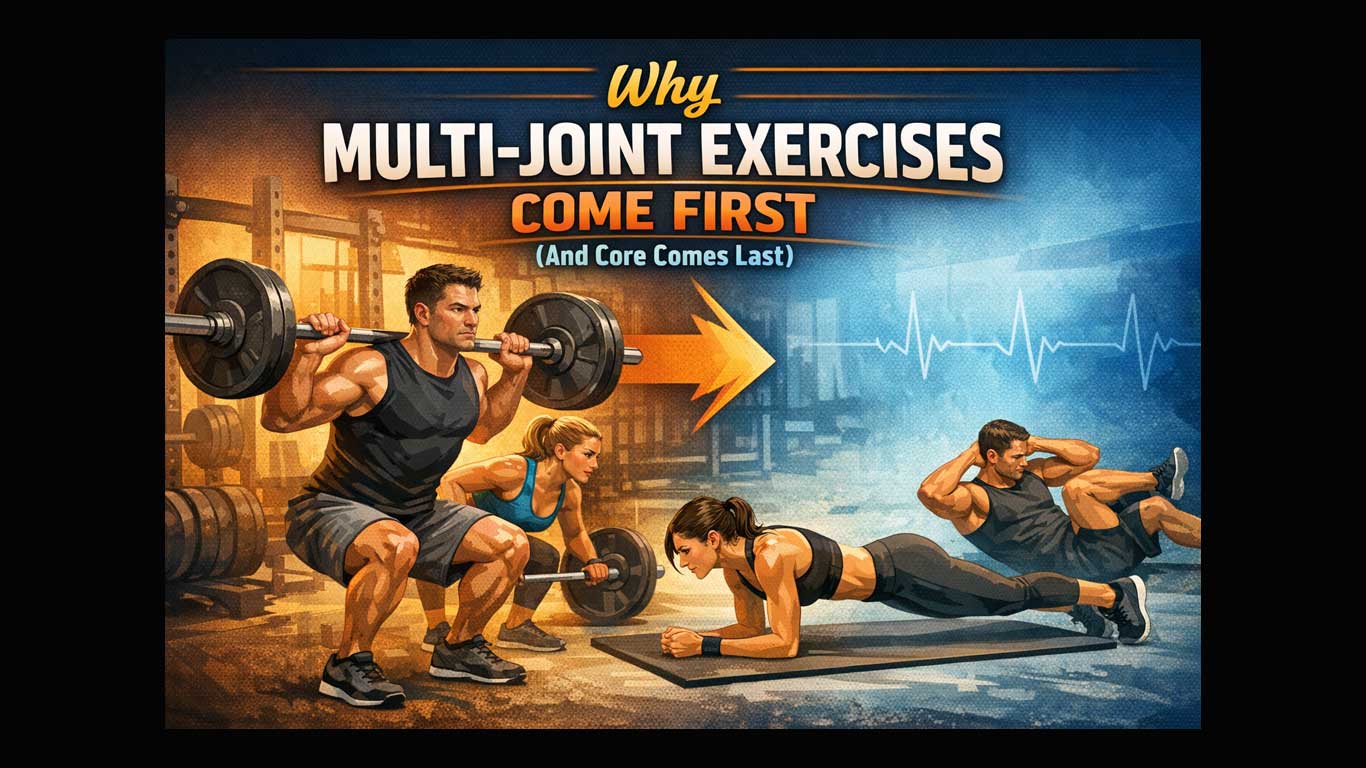
Why Multi-Joint Exercises Come First
💪 Why Multi-Joint Exercises Come First (And Core Comes Last)
Walk into most gyms and you’ll see workouts that look random—bicep curls before rows, tricep pushdowns before presses, core thrown in at the beginning just to “get it out of the way.” It feels productive, but it’s not optimal. The order of your exercises matters more than most people realize. If your goal is strength, muscle, and long-term progress, your workout should follow a clear hierarchy: multi-joint movements first, single-joint exercises second, and core work last.
Multi-joint exercises—also known as compound movements—should always lead your workout. These are lifts like squats, deadlifts, bench presses, rows, and overhead presses. They involve multiple muscle groups working together and require the most energy, coordination, and focus. Because of this, they deliver the greatest return on effort. When you’re fresh, your strength is highest, your nervous system is fully engaged, and your ability to produce force is at its peak. That’s exactly when you want to be performing your most important lifts.
If you flip that order and start with smaller, isolated movements, you’re already limiting your potential. Fatiguing your arms before a pull workout or your shoulders before pressing reduces your ability to lift effectively in compound movements. This not only decreases performance, but it also reduces the overall stimulus needed for growth and strength development. In simple terms, you’re making your most important work weaker before it even begins.
After your compound lifts are complete, that’s when single-joint exercises come into play. Movements like curls, lateral raises, leg extensions, and tricep pushdowns allow you to isolate specific muscles and add targeted volume. At this stage, you’ve already done the heavy work, and now you’re refining and finishing. These exercises are important, but they’re not the foundation—they’re the support system that enhances what you’ve already built during your compound work.
Core training, often misunderstood, belongs at the end of your workout. Your core is heavily involved in almost every compound lift you perform. It stabilizes your spine during squats and deadlifts, supports pressing movements, and plays a critical role in maintaining proper form. If you fatigue your core early, you compromise your ability to perform these lifts safely and effectively. A tired core leads to reduced stability, weaker performance, and increased risk of injury. By training core last, you ensure it has already done its job during your primary lifts and can now be trained directly without interfering with the rest of your workout.
This structure—compound first, isolation second, core last—is not just a preference; it’s a system built on efficiency and results. It allows you to maximize strength, maintain proper form, and get the most out of every minute in the gym. It aligns with how the body performs best: high-output movements when fresh, targeted work when fatigued, and stability training when everything else is complete.
At MuscleRX, this approach is built into every program. There’s no guesswork and no wasted effort. Each workout is designed to follow a logical progression that prioritizes results, efficiency, and long-term consistency. When you train in the right order, everything improves—your strength, your performance, and your ability to stay consistent.
Because in the end, it’s not just about what exercises you do—it’s about **when** you do them.
It’s not about how hard you go once—it’s about how often you show up.