
 personal trainer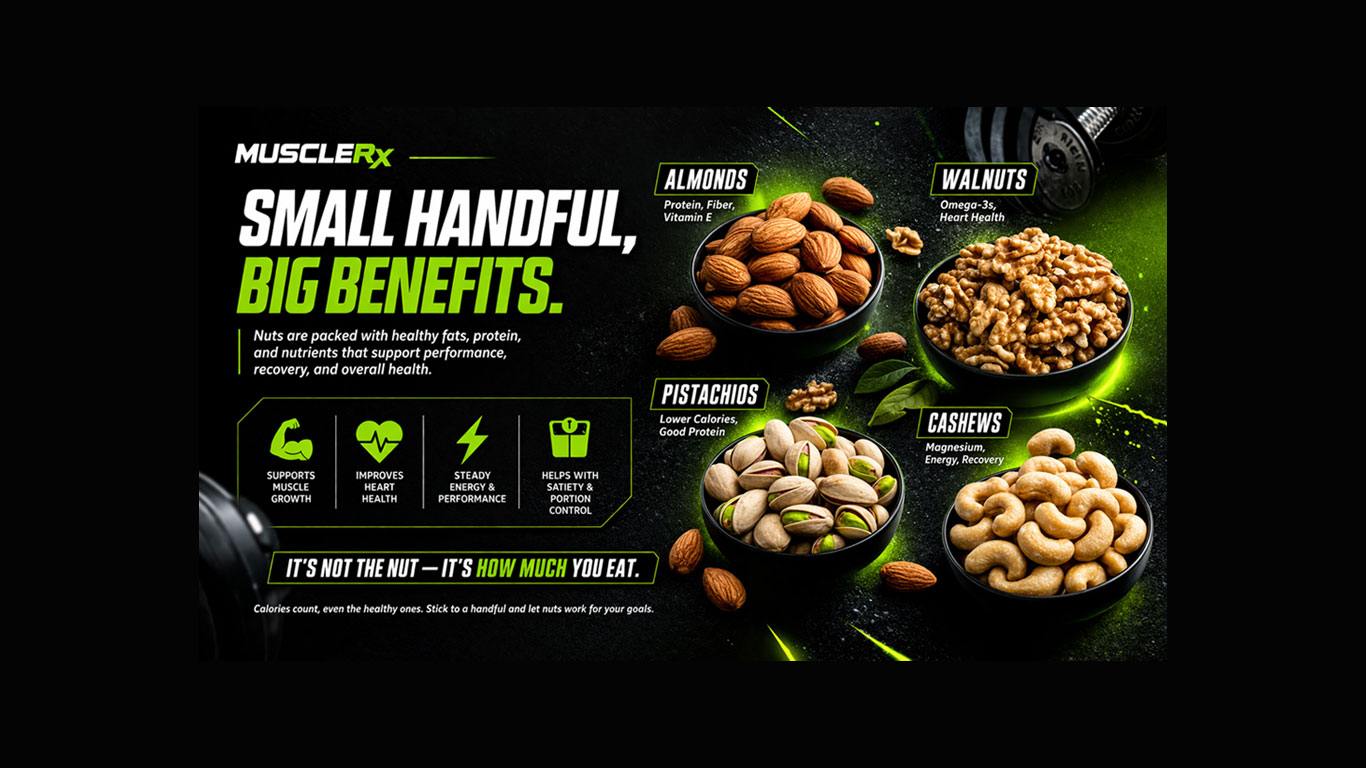
Nuts are one of the most misunderstood foods in nutrition
� Which Nuts
Nuts are one of the most misunderstood foods in nutrition. On one hand, they’re packed with healthy fats, protein, vitamins, and minerals that support heart health, muscle recovery, and overall performance. On the other hand, they’re calorie-dense and easy to overeat, which is where many people run into trouble. The truth is, nuts aren’t “good” or “bad”—they’re powerful tools when used correctly. Understanding the differences between them, how they fit into your goals, and how much to eat can make a significant impact on your results.
Nut Comparison Table
Approximate nutrition values per 1 ounce serving. Use this table to compare calories, protein, fat, and carbs so you can choose the right nuts for your goals.
| Nut | Serving | Calories | Protein | Fat | Carbs | Why It Stands Out |
|---|---|---|---|---|---|---|
| Almonds | 1 oz (~23 almonds) | 164 | 6g | 14g | 6g | Great all-around choice with protein, fiber, and vitamin E |
| Walnuts | 1 oz (~14 halves) | 185 | 4g | 18g | 4g | Best plant source of omega-3 fats |
| Pistachios | 1 oz (~49 kernels) | 159 | 6g | 13g | 8g | Lower calorie option with good protein and portion control benefits |
| Cashews | 1 oz (~18 nuts) | 157 | 5g | 12g | 9g | Higher carb nut, rich in magnesium and good for energy |
| Brazil Nuts | 1 oz (~6 nuts) | 187 | 4g | 19g | 3g | Extremely high in selenium; best used in small amounts |
| Peanuts | 1 oz (~28 peanuts) | 161 | 7g | 14g | 5g | Affordable, high-protein option for muscle support |
| Pecans | 1 oz (~19 halves) | 196 | 3g | 20g | 4g | Very high in healthy fats, but easy to overeat |
| Macadamia Nuts | 1 oz (~10–12 nuts) | 204 | 2g | 21g | 4g | Highest fat and calories; best for smaller portions |
| Hazelnuts | 1 oz (~21 nuts) | 178 | 4g | 17g | 5g | Good source of healthy fats and antioxidants |
🥜 Almonds
Almonds are one of the most balanced and widely recommended nuts thanks to their combination of protein, fiber, and vitamin E, making them great for satiety, recovery, and overall health. They’re especially useful for fat loss because they help keep you full while delivering steady energy. The downside is they’re still calorie-dense, so overeating can slow progress quickly. A common misconception is that almonds are “free food” because they’re healthy—but like all nuts, portion control matters.
🥜 Walnuts
Walnuts stand out as one of the best plant-based sources of omega-3 fatty acids, making them a strong choice for heart health, brain function, and reducing inflammation. They’re especially valuable for longevity-focused diets. However, they’re higher in calories and fat than many other nuts, which can add up quickly. Some people avoid walnuts because they’re “too fatty,” but that fat is exactly what makes them beneficial—just in the right amounts.
🥜 Pistachios
Pistachios are one of the best nuts for portion control and fat loss due to their lower calorie density and the fact that eating them in the shell slows you down. They also provide a solid amount of protein and fiber, helping with fullness and consistency. The main downside is that they’re easy to overeat when shelled and often come heavily salted. A misconception is that they’re not as “powerful” as other nuts, but they’re actually one of the most practical for everyday use.
🥜 Cashews
Cashews are slightly higher in carbohydrates than most nuts, making them a good option for energy and performance, especially around workouts. They’re also rich in magnesium, which supports muscle function and recovery. The downside is their soft texture makes them easy to overeat, and they don’t provide the same satiety as harder nuts like almonds. They often get labeled as “less healthy,” but that’s mostly due to diet trends—not actual nutritional value.
🥜 Brazil Nuts
Brazil nuts are extremely high in selenium, a mineral that supports thyroid function, immune health, and overall metabolic balance. Just one or two nuts can meet your daily requirement, making them incredibly efficient. The downside is that too much selenium can be harmful, so they should be eaten in very small amounts. A common misconception is that more is better, but with Brazil nuts, less is actually optimal.
🥜 Peanuts
Peanuts are one of the most affordable and accessible sources of protein, making them a practical option for muscle support and daily nutrition. They’re widely used because they’re cost-effective and versatile. However, they’re often consumed in processed forms—like peanut butter with added sugar and oils—which is where the negative reputation comes from. Another misconception is that peanuts are unhealthy because they’re legumes, but for most people, they’re a perfectly solid option when minimally processed.
🥜 Pecans
Pecans are very high in healthy fats and have a rich, satisfying flavor, making them a good choice for energy and adding variety to meals. They also contain antioxidants that support overall health. The downside is their high calorie content and low protein, which can make them easy to overconsume without feeling full. They’re sometimes seen as a “treat nut,” but they can absolutely fit into a healthy diet with proper portion control.
🥜 Macadamia Nuts
Macadamia nuts are the highest in fat and calories among common nuts, primarily consisting of monounsaturated fats that support heart health. They’re very satisfying and energy-dense, making them useful in smaller portions. The downside is how quickly calories add up—just a small handful can significantly impact daily intake. They’re often avoided because they’re “too fatty,” but that’s not inherently negative—it just requires awareness and moderation.
🥜 Hazelnuts
Hazelnuts provide a strong mix of healthy fats, antioxidants, and micronutrients, making them beneficial for heart health and overall wellness. They also add variety and flavor, especially in different meal combinations. The downside is similar to most nuts—they’re calorie-dense and easy to overeat if not portioned. A misconception is that they’re only useful in sweets or spreads, but they can be a solid addition to a balanced diet on their own.
Nuts don’t make you gain fat—overeating them does.