
 personal trainer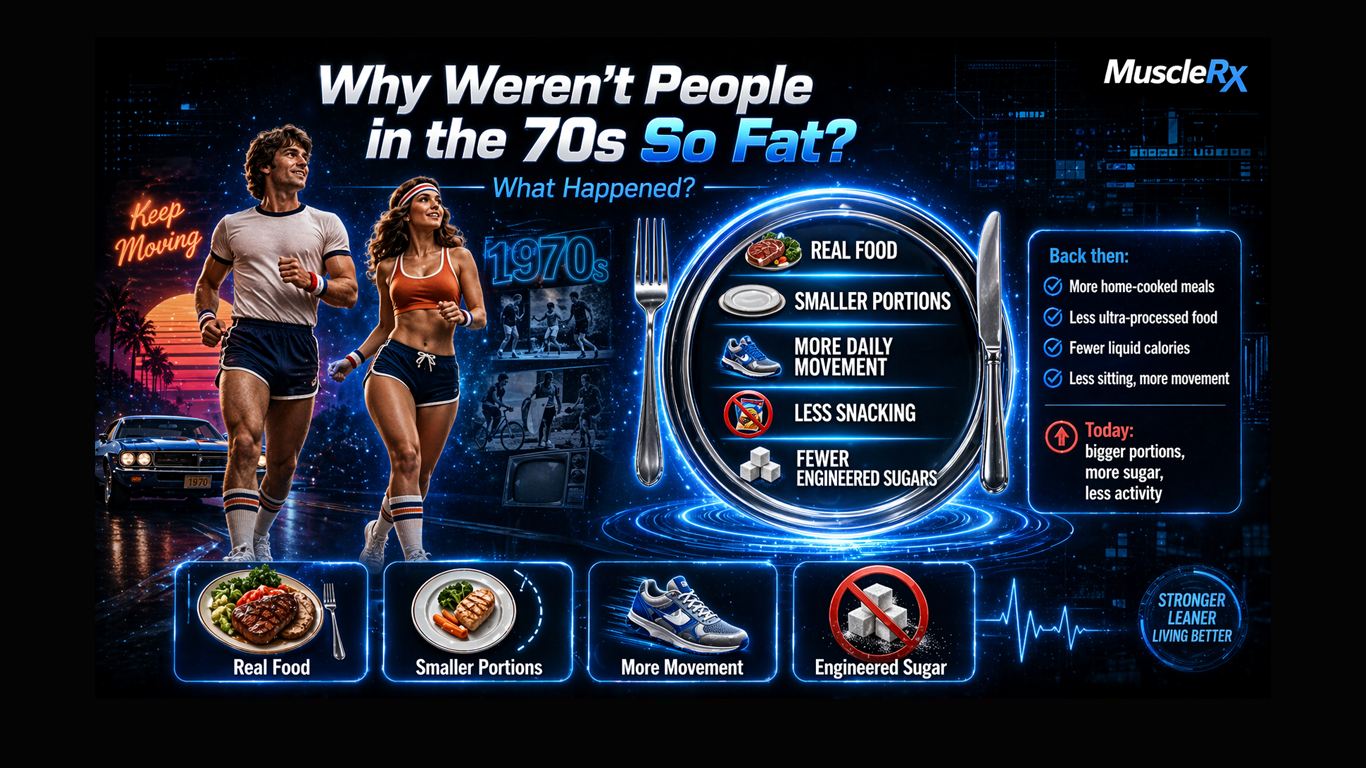
People in the 1970s
Why Weren’t People in the 70s So Fat? What Happened?
Look at photos from the 1970s. Go to a beach, a ball game, a mall, or a neighborhood block party. One thing stands out fast: people were generally leaner. Not perfect. Not all ripped. Not all healthy. But clearly leaner than what we see today.
So what happened? It was not one thing. It was everything.
Food changed. Movement changed. Work changed. Recreation changed. Daily life changed. And maybe most importantly, the food industry learned how to engineer products that were almost impossible to stop eating. That is where the real damage started.
Back then, people still ate junk food, but junk food had not yet become the backbone of the average diet. Most meals were still built around regular food: meat, eggs, potatoes, rice, vegetables, sandwiches, cereal, toast, and milk. Simple stuff. Imperfect, but recognizable.
Now a huge percentage of the modern diet comes from products that barely resemble food in the traditional sense. They are manufactured to be convenient, hyper-palatable, shelf-stable, cheap to produce, and highly profitable. That means more sugar, more refined flour, more additives, more flavor chemistry, and more calories packed into less volume.
And then came the explosion of engineered sugars. Not just regular sugar, but sugar used as a weaponized ingredient. Food companies learned how to hit the brain’s reward system harder and faster. Sweetness got stronger. Foods got more addictive. Drinks got loaded. Sauces got sweeter. Bread got sweeter. Yogurt got sweeter. Snacks got sweeter. Even foods people thought were healthy became sugar-delivery systems.
This was not an accident. The modern food industry figured out that when fat, salt, and engineered sugars are combined in just the right way, people eat more. A lot more. And they do it without even realizing it.
Portion sizes changed too. People in the 70s were not walking around with 64-ounce drinks, oversized combo meals, bottomless snacks, and desserts big enough for three people. Eating out was different. Snacking was different. Convenience food was different. Today, huge portions are normal. Being overfed has been rebranded as value.
Another major shift was movement. People did more without calling it exercise. They walked more. They stood more. They did yard work. They carried groceries. They got up to change the channel. They had fewer labor-saving devices, fewer screens, fewer delivery apps, and fewer reasons to stay planted in a chair all day. Life itself burned more calories.
Today, you can work from a chair, eat from a chair, drive everywhere, shop from your couch, and relax by staring at another screen. Modern life has stripped movement out of daily living.
Then there is the constant eating. In earlier decades, many people ate meals and then moved on with the day. Now people live in a nonstop feeding cycle. Coffee drinks, protein bars, energy drinks, snack packs, fast food, drive-thru meals, treats at night, and liquid calories all day long. A lot of people are not overeating at meals. They are overeating all the time.
And stress plays a role too. Modern life is faster, more distracted, more sleep-deprived, and more artificial. Poor sleep, constant stimulation, and chronic stress push cravings up and activity down. That combination makes fat gain easier even before you get to the food itself. The body does not do well in a world of low movement, high stress, low sleep, and unlimited engineered food.
So no, people in the 70s were not magically more disciplined. They were not better humans. They were living in a less aggressive food environment. They were surrounded by fewer calorie traps, fewer engineered snacks, fewer liquid sugars, fewer giant portions, and more built-in movement. That matters. A lot.
The lesson is not that we need to romanticize the 70s. The lesson is that the modern world is built to make people heavier. If you want to stay lean now, you have to do on purpose what used to happen by default. You have to move more. You have to eat more real food. You have to stop treating engineered sugar products like normal everyday nutrition. And you have to understand that gaining fat today is not just about laziness or lack of willpower. It is about living in an environment that is designed to make overeating easy and inactivity normal.
That is what happened. And that is why so many people are fighting a battle their grandparents never had to fight at this level.
Your body doesn’t care where your protein comes from—it cares that you show up and use it.