
 personal trainer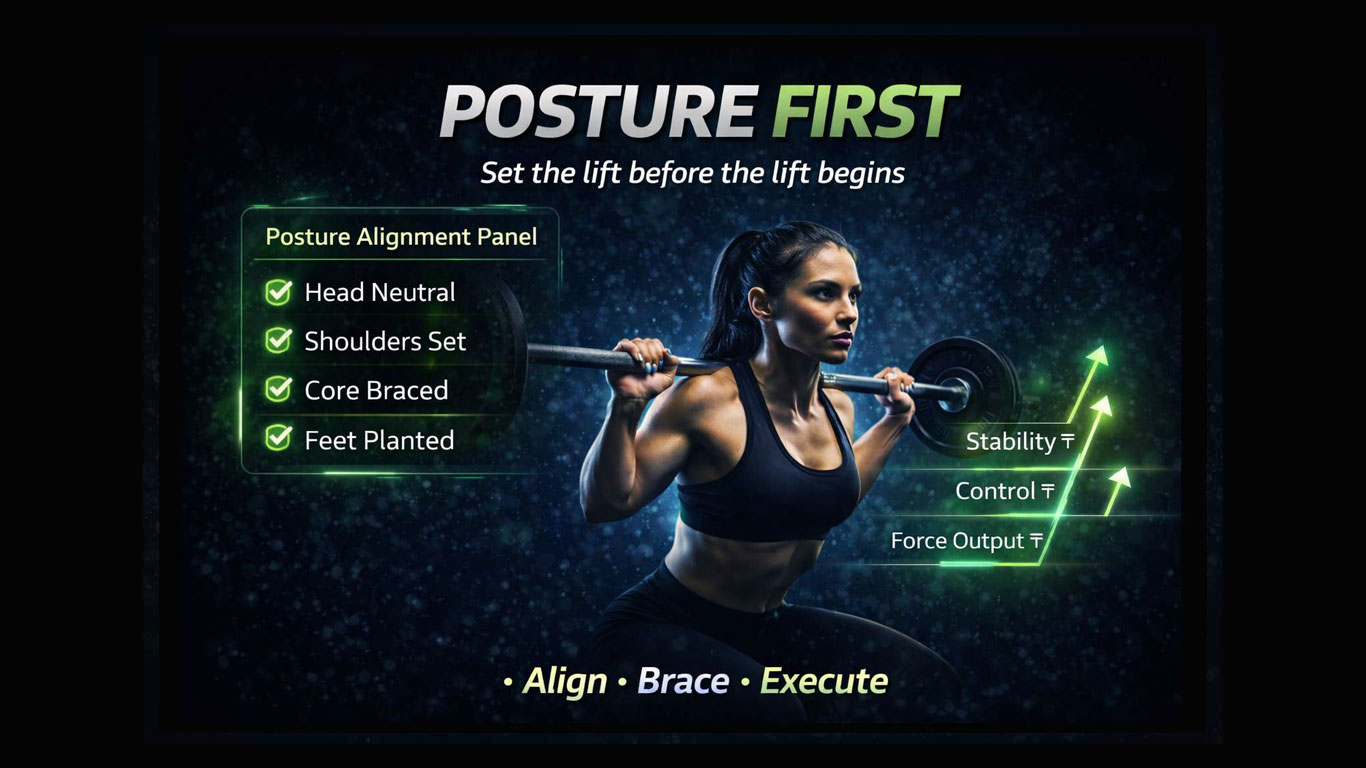
Posture First
� Before intensity even matters ...
Before the weight moves, before the first rep begins, before intensity even matters—there’s one thing that determines everything that follows: posture.
Most people think of posture as something secondary, something to fix during the movement. But by the time the lift starts, it’s already too late. The outcome of the set is decided in the setup. If your posture is off before you begin, every rep that follows is built on a weak foundation.
Setting your posture correctly before a lift isn’t about looking good—it’s about putting your body in the strongest, safest, and most effective position to produce force. It determines which muscles do the work, how much tension you create, and how well you control the weight. Without it, even the best exercise selection and the heaviest weight won’t deliver results the way they should.
The first step in proper setup is alignment. Your body should be stacked in a way that allows force to transfer efficiently. That means your head neutral—not craning forward or tilted back. Your shoulders pulled down and slightly back—not shrugged or rounded. Your chest up, but not overextended. And your core engaged—not relaxed, not exaggerated, but braced as if preparing to absorb force. This alignment creates stability, and stability is what allows strength to show up.
From there, tension becomes the focus. Good posture isn’t passive—it’s active. Before the first rep, you should feel your body “locked in.” Your feet are planted, gripping the ground. Your hands are set with intention. Your core is braced. Your upper body is engaged. This full-body tension creates a controlled environment where the movement can happen with purpose instead of randomness.
Breathing also plays a critical role in posture. A proper breath before the lift helps set the core and stabilize the spine. Instead of shallow breathing, take a controlled breath in, expand through your midsection, and brace. This creates internal pressure that protects your lower back and reinforces your posture throughout the movement.
One of the biggest mistakes people make is rushing the setup. They grab the weight and start the movement immediately, skipping the most important part of the lift. But taking just a few seconds to establish posture changes everything. It shifts your mindset from simply moving weight to executing a movement with precision.
When posture is set correctly, the exercise feels different. The target muscles engage more quickly. The movement feels smoother and more controlled. You don’t have to compensate or adjust mid-rep because everything is already in position. This not only improves results but also reduces the risk of injury.
Posture also reinforces consistency. When every set starts the same way—with proper alignment, tension, and control—you create a repeatable pattern. And that consistency is what allows you to track progress and build strength over time.
In the end, posture isn’t a small detail—it’s the starting point of every effective lift. It’s the difference between training with intention and just going through the motions. So before you lift, before you count reps, before you think about intensity, take a moment to set your posture.
Because when posture comes first, everything else falls into place.
If your form breaks, your results break. Control the movement—control the outcome.