
 personal trainer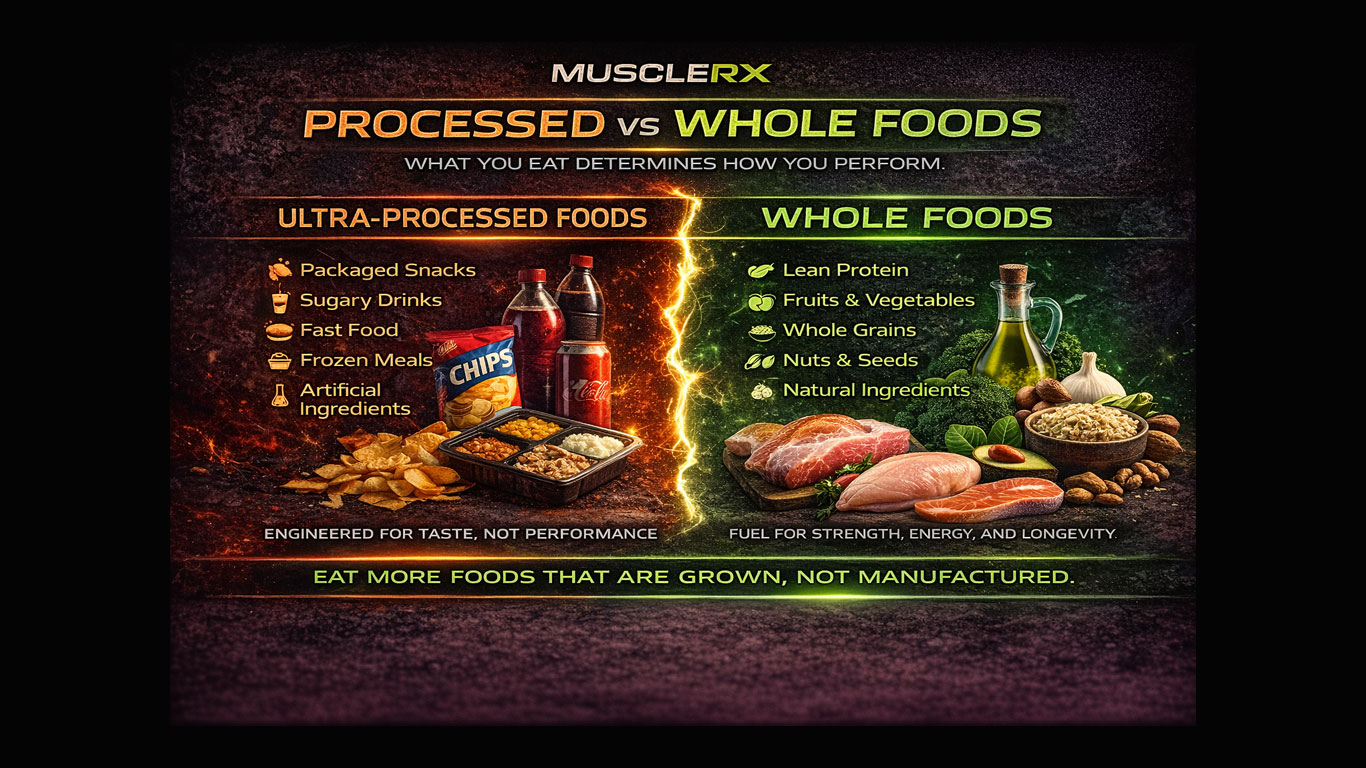
Processed Food
� What It Is, What to Avoid, and Why It Matters
Most people think they understand processed food, but the reality is that almost everything we eat is processed in some way. Processing simply means a food has been altered from its natural state—washed, cut, cooked, frozen, or packaged. Even foods like frozen vegetables, cooked rice, or roasted nuts fall into this category. These are considered minimally processed foods, and they are not the problem. In fact, they can still be highly nutritious and support a healthy diet.
The real issue begins with ultra-processed foods. These are foods that have been heavily modified and contain ingredients you wouldn’t typically use in your own kitchen. They often include artificial additives, preservatives, added sugars, refined oils, and flavor enhancers. These foods are engineered to taste better, last longer, and keep you coming back for more. They are built for convenience and profitability—not for your health or performance.
| Food Type | Examples | Why It’s a Problem | Better Alternative |
|---|---|---|---|
| Sugary Drinks | Soda, energy drinks, sweetened coffee | High sugar, no satiety, spikes insulin | Water, black coffee, electrolyte water |
| Packaged Snacks | Chips, crackers, snack bars | Refined carbs + oils, easy to overeat | Nuts, fruit, Greek yogurt |
| Processed Meats | Hot dogs, deli meats, sausages | Preservatives, high sodium | Fresh chicken, turkey, beef |
| Frozen Meals | TV dinners, microwavable meals | Low nutrient density, high sodium | Prep simple whole meals |
| Breakfast Cereals | Sugary cereals, granola mixes | High sugar, low protein | Eggs, oats, Greek yogurt |
| Fast Food | Burgers, fries, fried chicken | High calories, poor quality fats | Grilled protein + whole carbs |
| Desserts & Sweets | Cookies, cakes, candy | High sugar, addictive, low nutrition | Dark chocolate, fruit |
Ultra-processed foods can quietly work against your body in ways that aren’t immediately obvious. They tend to increase calorie intake without making you feel full, disrupt natural hunger signals, and cause spikes and crashes in blood sugar. Over time, this can lead to fat gain, lower energy levels, poor recovery, and a higher risk of chronic health issues. The problem isn’t having one processed meal here and there—it’s the consistent, daily reliance on these foods that creates long-term damage.
A simple way to approach your nutrition is to think about where your food comes from. If it came from a factory, it’s worth questioning. If it came from the ground or from an animal, it should likely make up the majority of your diet. This doesn’t require a strict diet plan or complicated rules—just better awareness and more intentional choices.
When it comes to what to limit, the biggest offenders are foods that are heavily packaged and designed for convenience. Sugary drinks like soda and energy drinks provide large amounts of calories with no real satiety. Packaged snacks such as chips and crackers are easy to overeat due to their combination of refined carbs and processed fats. Processed meats like deli slices and sausages often contain high sodium and preservatives, while frozen meals tend to sacrifice nutrient quality for shelf life and convenience. Breakfast cereals, especially the sugary varieties, can spike blood sugar without providing lasting energy, and fast food meals are typically high in calories with poor-quality ingredients. Desserts and sweets, while enjoyable in moderation, are often loaded with sugar and offer little nutritional value.
Instead of focusing on restriction, it’s more effective to shift your focus toward better choices. Prioritize whole foods, simple ingredients, and meals you can easily recognize and understand. The more your food resembles its natural form, the more likely it is to support your health, energy, and performance.
Processed food itself isn’t the enemy, but ultra-processed food is a problem that most people underestimate. You don’t need extreme diets or rigid rules to improve your nutrition. Eating more foods that are grown and fewer that are manufactured is a simple shift that can dramatically improve how your body looks, feels, and performs.
Processed food feeds cravings. Whole food fuels performance.