
 personal trainer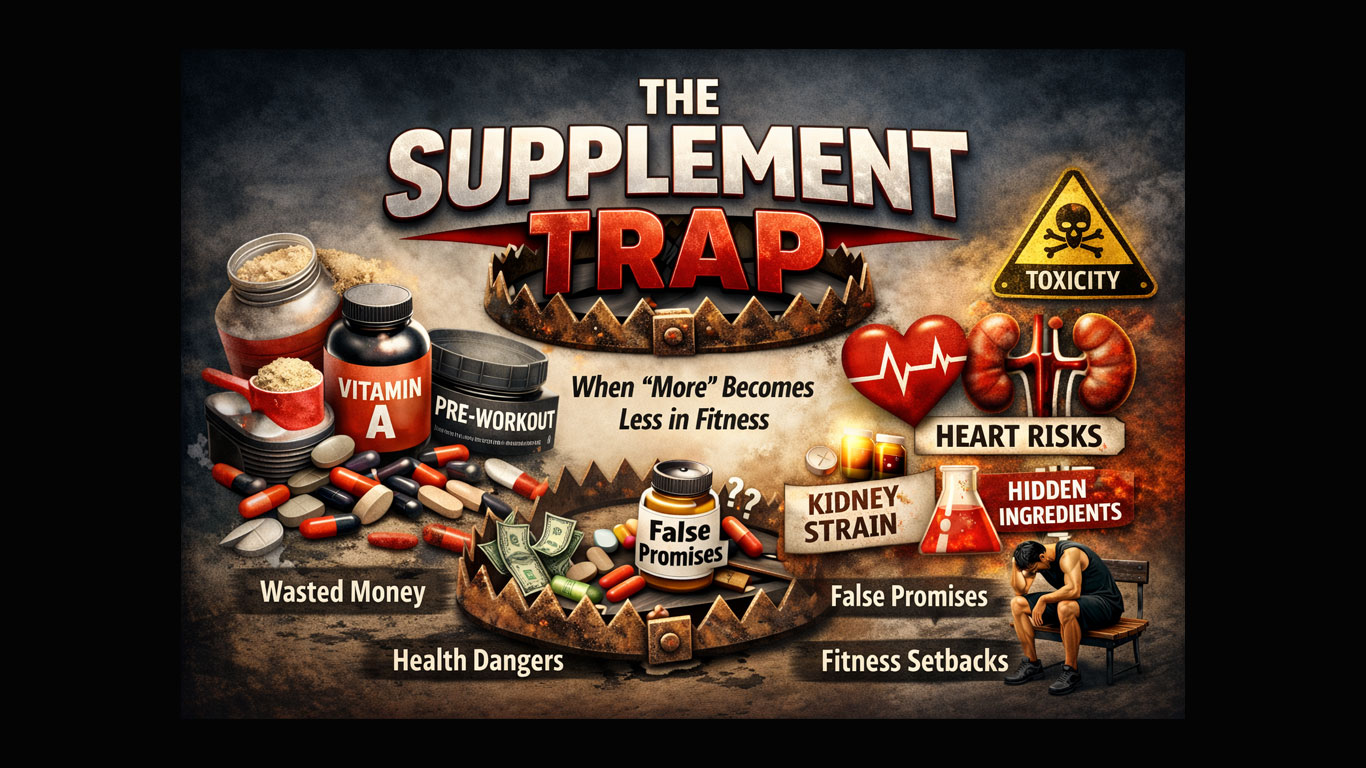
The Supplement Trap
� When “More” Becomes Less in Fitness
The Supplement Trap: When “More” Becomes Less in Fitness
Walk into any supplement store or scroll through fitness content online, and you’ll quickly be sold a powerful idea: more supplements equal better results. More protein. More vitamins. More performance boosters. More recovery aids. But the truth is far less exciting—and far more important: over-supplementation is one of the most overlooked problems in modern fitness. What’s marketed as optimization often turns into excess, waste, and in some cases, real harm.
The Illusion of “More Is Better”
The supplement industry thrives on one simple message: if a little helps, more must help even more. It’s a compelling narrative—but a flawed one. Your body doesn’t operate on marketing logic. It operates on balance. Once your nutritional needs are met, adding more doesn’t accelerate results. It often does the opposite—creating stress, inefficiency, or even toxicity.
Hidden Dangers of Over-Supplementation
1. Toxic Build-Up from Fat-Soluble Vitamins
Unlike water-soluble vitamins (like vitamin C), fat-soluble vitamins—such as A and D—are stored in the body.That means excess doesn’t just get flushed out. It accumulates. Over time, this can lead to:
- Nausea and dizziness
- Kidney stones
- Organ stress
- Long-term toxicity
What starts as “extra health insurance” can quietly become a health liability.
2. Pre-Workout Overload: Energy at a Cost
Pre-workouts are designed to stimulate—but many people treat them like fuel instead of a tool. Overuse can lead to:
- Elevated heart rate
- Increased blood pressure
- Anxiety and jitters
- Tingling sensations (paresthesia)
Instead of enhancing performance, excessive stimulation can reduce focus, disrupt sleep, and ultimately hurt recovery and consistency—the real drivers of progress.
3. Protein Overload: More Isn’t More Muscle
Protein is essential—but it’s also one of the most overconsumed supplements. Many people already meet their protein needs through food, yet still add shakes, bars, and powders on top.
The result:
- No additional muscle gain
- Increased calorie intake
- Potential kidney strain over time
Muscle growth doesn’t come from excess protein—it comes from training stimulus + adequate intake + recovery.
4. The Risk of Illicit or Contaminated Ingredients
Not all supplements are what they claim to be. Some muscle-building or fat-loss products have been found to contain:
- Undisclosed steroids
- Hormone-altering compounds
- Contaminants that stress the liver
Because the supplement industry is loosely regulated, products are often brought to market faster than they are properly tested. You may think you’re taking a harmless performance booster—when in reality, you’re taking something far more dangerous.
5. When Supplements Backfire: The Antioxidant Paradox
One of the most surprising truths in fitness science: High doses of antioxidants can actually reduce the benefits of exercise.Training creates controlled stress in the body. That stress is what triggers adaptation—stronger muscles, improved endurance, better performance.Flooding the body with high-dose antioxidants can blunt that response, leading to:
- Reduced training adaptation
- Increased fatigue
- Slower progress
In trying to “optimize recovery,” you may actually be blocking improvement.
The Real Problem: Profit Over Precision
The supplement industry is built on marketing, not necessity.
- New products are constantly introduced
- Claims are often exaggerated
- Research is limited or selectively presented
The goal isn’t always better results—it’s more consumption. And when consumers don’t see results? The answer they’re sold is simple: “You need another supplement.”
What Your Body Actually Needs
Most people don’t have a supplement deficiency—they have a consistency deficiency. Before adding anything, ask:
- Am I eating balanced, whole foods?
- Am I training consistently?
- Am I sleeping enough?
- Am I recovering properly?
If those aren’t in place, no supplement will fix the gap. A Smarter Approach to Supplementation Supplements should do exactly what their name implies: supplement—not replace or overload. A smarter approach:
- Use supplements to fill specific gaps, not blanket your diet
- Stick to evidence-based essentials (not trends)
- Avoid stacking multiple products with overlapping ingredients
- Prioritize food, training, and recovery first
Final Thought
The biggest misconception in fitness isn’t about workouts—it’s about supplementation. More pills, powders, and formulas don’t equal more progress. In many cases, they create noise, confusion, and unnecessary risk. The real edge in fitness isn’t found in a tub or a capsule. It’s found in doing the basics—consistently, intelligently, and without distraction.
Supplements don’t build your body—your habits do. The rest is just marketing.