 personal trainer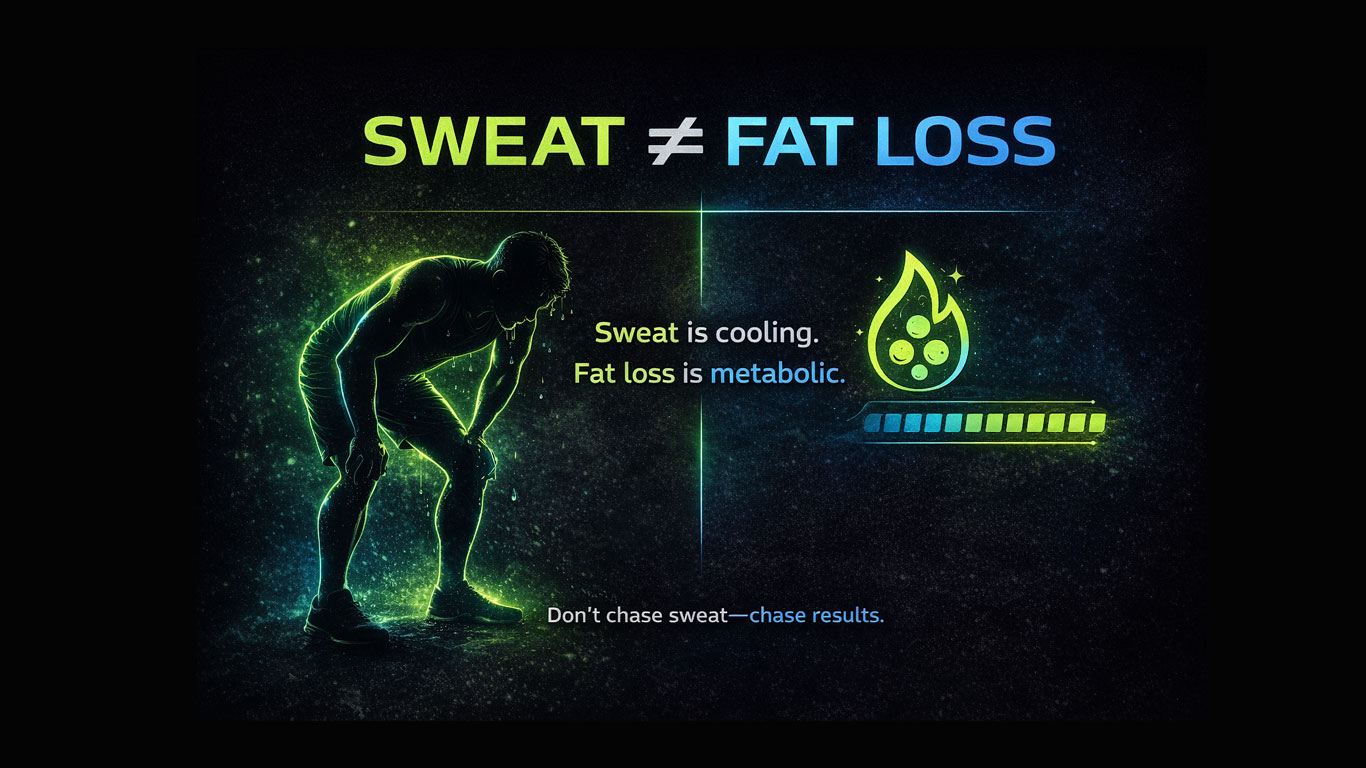
sweat and fat loss
� Sweat tells you how HOT you are.
The image of a great workout is often painted in sweat—shirts soaked through, puddles on the floor, and the feeling that more sweat must mean more progress. It’s one of the most common beliefs in fitness: if you’re drenched, you must have burned more fat or had a better session. But this idea, while popular, is largely a misconception.
Sweat is not a direct indicator of fat loss. It’s your body’s cooling system. When your internal temperature rises during exercise, your body releases sweat to help regulate heat through evaporation. The amount you sweat depends on factors like temperature, humidity, hydration, genetics, and even what you’re wearing—not just how hard you’re working. Two people can perform the exact same workout, and one may be drenched while the other remains relatively dry. That difference doesn’t mean one burned more fat than the other—it simply means their bodies regulate heat differently.
The confusion often comes from the temporary drop in body weight after a sweaty workout. Step on a scale right after an intense session, and you might see a lower number. It feels like progress, but what you’ve actually lost is water, not fat. As soon as you rehydrate, that weight comes back. Fat loss, on the other hand, is a slower metabolic process that occurs when your body uses stored energy over time, not something that happens instantly because you’re sweating more.
This misconception has also fueled trends like “sweat suits,” excessive cardio in hot environments, or workouts designed to make you sweat as much as possible. While these may increase perspiration, they don’t necessarily increase fat loss and can even lead to dehydration, reduced performance, and unnecessary strain on the body. In some cases, chasing sweat can actually make your workouts less effective because you fatigue faster and compromise intensity, form, or consistency.
A truly effective workout isn’t measured by how much you sweat—it’s measured by what your body is being challenged to do. Are you progressively increasing resistance? Are you improving endurance, strength, or movement quality? Are you consistent over time? These are the markers that actually drive fat loss and performance improvements. A strength training session might not leave you drenched, but it can be far more impactful for long-term body composition than an hour of low-intensity sweating.
There’s also a mental trap in equating sweat with success. It creates a false feedback loop where people feel like a workout “didn’t count” unless they’re exhausted and dripping. This can lead to overtraining, burnout, or constantly chasing intensity instead of training with purpose. Fitness becomes about how it feels in the moment rather than what it’s doing for you over time.
The reality is simple: sweat tells you how hot you are, not how effective your workout is. Fat loss is driven by energy balance, consistency, and the type of training you perform—not the amount of perspiration on your shirt. When you shift your focus from sweating more to training smarter, you begin to see results that actually last.
In the end, the best workouts aren’t the ones that leave the floor soaked—they’re the ones that move you forward.
If sweat equals results, a sauna would be the best workout.