
 personal trainer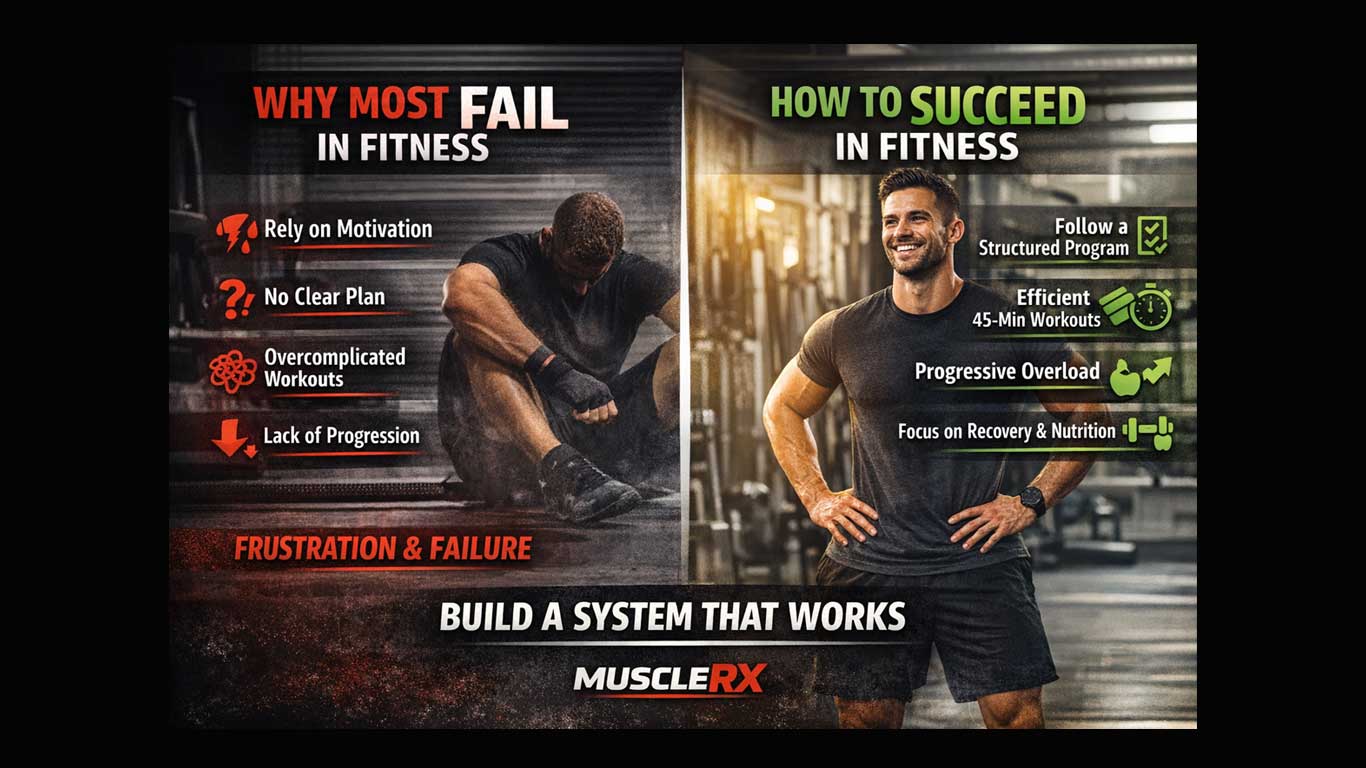
Why Most People Fail
💪 Why Most People Fail in Fitness (And Why Most Workout Plans Fail)
Walk into any gym in January and you’ll see it—motivation, energy, and packed floors. Fast forward a few weeks, and the crowd thins out. By a few months in, most of those people are gone. It’s not because they didn’t want results. It’s not because they weren’t capable. It’s because both people—and the workout plans they follow—are set up to fail from the start.
Most people fail in fitness because they rely on motivation instead of structure. Motivation is powerful, but it’s temporary. It comes in waves, often driven by emotion—New Year’s resolutions, a big event, or a moment of frustration. But when that feeling fades, there’s nothing left to carry them forward. Without a system in place, workouts become inconsistent, and inconsistency leads to a lack of results. When results don’t come, motivation drops even further, and the cycle repeats.
Another major reason people fail is that they don’t have a clear plan. They walk into the gym and decide what to do on the spot. One day it’s chest, the next day it’s arms, then maybe some cardio, then nothing at all. This randomness creates random results. There’s no progression, no tracking, and no direction. Without a roadmap, it’s impossible to measure improvement, and without improvement, it’s easy to lose interest.
Time is another factor that quietly works against people. Many believe that longer workouts equal better results, so they aim for long, exhausting sessions. But those workouts are hard to sustain. Life gets busy, schedules change, and suddenly there’s no time for a two-hour gym session. Instead of adjusting, people stop altogether. The issue isn’t lack of effort—it’s lack of sustainability. A plan that doesn’t fit into real life will always fail.
Workout plans themselves often contribute to the problem. Many are overly complicated, filled with too many exercises, advanced techniques, or unrealistic expectations. They look impressive on paper but are difficult to follow consistently. Others go in the opposite direction—too generic, offering no structure or progression. They don’t adapt, don’t evolve, and don’t guide the user forward. In both cases, the result is the same: confusion, frustration, and eventually, quitting.
Recovery and nutrition are often overlooked as well. People train hard but don’t support their bodies outside the gym. Lack of sleep, poor nutrition, and no recovery strategy limit results. When the body doesn’t recover, performance drops. When performance drops, motivation follows. It’s another hidden cycle that leads people away from consistency.
But the biggest issue of all is this: most plans aren’t built for real people. They don’t account for busy schedules, fluctuating energy levels, or the mental side of staying consistent. They assume perfect adherence, perfect motivation, and perfect conditions. Real life doesn’t work that way..
That’s where the difference lies.
At MuscleRX, the focus is not just on workouts—it’s on building a system that people can actually follow. Structured programs remove guesswork. Time-efficient sessions make consistency possible. Progressive cycles ensure continuous improvement. And most importantly, everything is designed with one goal in mind: sustainability.
Because success in fitness isn’t about doing everything perfectly for a short time. It’s about doing the right things consistently over a long period of time.
Most people don’t fail because they’re incapable. They fail because they were never given a system that works.
And most workout plans don’t fail because they lack effort. They fail because they lack structure, progression, and real-world application.
Fix those things—and everything changes.
Consistency builds what motivation can’t sustain.